| Where Should I Go from Here? Visit the Map |
- Barnes, Fannie Mae
- Bartlett, Winthrop
- Bontecou, Daniel
- Bowen, Menard Kenner
- Britton, Joseph
- Brooks, Benjamin H
- Colam, William Newby
- Casebolt, Henry
- Connett, AN
- Davis, Henry L
- Diescher, Samuel
- Duncan, George S
- Eppelsheimer, William E
- Feinstein, Dianne
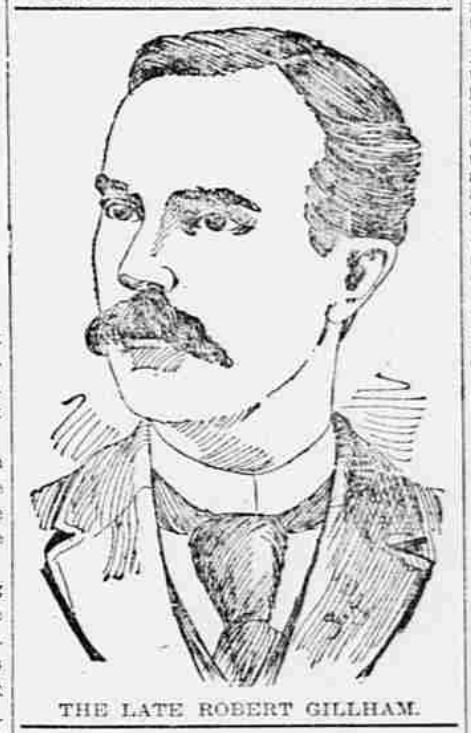
- Gillham, Robert
- Hallidie, Andrew S
- Harris, James W
- Harvey, Charles T
- Hellman, Isais W
- Hilton, George W
- Holmes, Charles B
- Holmes, Conway F
- Holmes, Howard C
- Holmes, Walton H
- Hovey, Asa
- Kebby, HM
- Kincaid, Joseph
- Klussmann, Friedel
- Knight, William B
- Lacey, Joe
- Lane, Henry M
- Lapham, Roger
- Lawless, Edward J
- Lowry, Thomas
- Miller, DJ
- McCann, Raymond M
- McCulloch, Robert
- McNulty, George W
- Moffitt, James
- Morton, Reuben
- Morrow, Robert F
- Murphy, RT
- Naphtaly, Joseph
- Nash, CT
- Olson, M
- Orengo, Joe
- Paine, William Henry
- Payne, Carl
- Phenix, William
- Potis, Salvator Jr
- Pritchard, Edward
- Rice, Walter
- Robinson, Sir James Clifton
- Root, Henry
- Saxton, Edmund
- Schmitt, Maurice
- Sinon, William
- Smallwood, Charles A
- Stut, JCH
- Sutro, Gustav
- Thompson, Jesse Murdock
- Upton, William B
- Van Vleck, Frank
- Walker, John
- Ward, Albert E
- Whitton, Andrew D
- Wise, Clift
- Wood, Fred W
- Wright, Augustine W
- Yerkes, Charles T
- Origin and Development of Cable Railways - Many of the items on this page came from this article in the May, 1895 Street Railway Journal
Barnes, Fannie Mae

|
Fannie Barnes posing with members of her family at the Cable Car Sesquicentennial Celebration on 02-August-2023. |
Fannie Mae Barnes became the first woman to operate a cable car grip on 15-Jan-1998.
Barnes was 52 years old at the time. She became a Muni bus driver in 1981. Before taking the grip, Barnes had served as a cable car conductor for six years.
The 25-day training class has an 80% washout rate. No other woman had made it past the first day of training class.
On 18-Jan-2002 she pulled grip on Car 9 as it carried the Olympic Torch on its way up the Hyde Street Hill.

|
Fannie Barnes ComMUNIty ad. April 2002. Photo by Joe Thompson. |
Go to top of page.
Bartlett, Winthrop
From the May, 1895 Street Railway Journal, page 312.
Winthrop Bartlett, of St. Louis, Mo., has been chiefly identified with the St. Louis cable railways. He was graduated from Washington University of that city in 1874, with the degree of Civil Engineer, and was previously connected with the Missouri Geological Survey. After graduation he entered the office of the master mechanic of the Wabash Railway Company as mechanical draughtsman, and for seven years, commencing in 1876, he was resident engineer of the St. Louis division of the Iron Mountain and Southern Railway Company. Since severing his connection with that company Mr. Bartlett has devoted himself excluiively to the constructing and operating departments of street railways in St. Louis, the most important of which are the following: Olive Street Cable Railway, Broadway Cable Railway. St. Louis & Suburban Railway (cable and electric), Market Street Railway (electric), Laclede & Fourth Street Railway (electric), Cass Avenue & Fair Ground Railway. Benton-Bellefontaine Electric Railway, Grand Avenue Railway, Midland Railway and Southern Railway. Mr. Bartlett is a member of the American Society of Civil Engineers and of the St. Louis Engineers' Club. |

Go to top of page.
Bontecou, Daniel
|
From the Kansas City, Missouri: Its History and Its People 1808-1908, Volume 3 by Carrie Westlake Whitney, pages 130-131.
Daniel Bontecou, consulting civil engineer of Kansas City, was born in Springfield, Massachusetts, September 14, 1851, a son of W. E. and C. C. Bontecou. The family comes of Huguenot ancestry, Pierre Bontecou having settled in New York in 1684 on his emigration from France. Daniel Bontecou acquired his early education in Boston and New York and pursued a scientific course in the College of the City of New York, from which he was graduated in 1871 with the degree of Bachelor of Science. His initial step in the business world was made as assistant engineer for the New York Central Railroad, the New York state canals and the department of public parks of New York city. In 1881 he came to Kansas City, where he had formed a partnership with William B. Knight under the firm style of Knight it Bontecou. civil engineers. This relation was maintained for ten years and since 1890 Mr. Bontecou has been alone in the practice of his profession. He has been accorded a liberal and representative clientage. He was chief engineer for the Kansas City Belt Railway Company from 1882 until 1886, was chief engineer of the Grand Avenue Railway Company (street railway) from 1886 until 1888, and from 1889 until 1893 was engaged in the construction of the Cable Railway System for the Capital Traction Company of Washington, D. C. He was chief engineer of the Kansas City, Fort Scott & Memphis Railroad and associated companies from 1890 until 1901, when the road was sold. In the latter year he became consulting engineer for the Metropolitan Street Railway and Lighting Company of Kansas City and so continued for a year. Since 1901 he has acted only as consulting engineer and has been associated with the United Zinc & Chemical Company, the Kansas City Portland Cement Company, the Hawkeye Portland Cement Company and various other interests. In 1885 Mr. Bontecou was married to Miss Nathalie Holdredge, of New Bedford, Massachusetts. He belongs to the Phi Beta Kappa, the Country Club and the American Society of Civil Engineers, of which he was a director from 1896 until 1898. He has gained wide distinction as a representative of his profession, his ability classing him with those who are foremost in the ranks of civil engineers. |
Go to top of page.
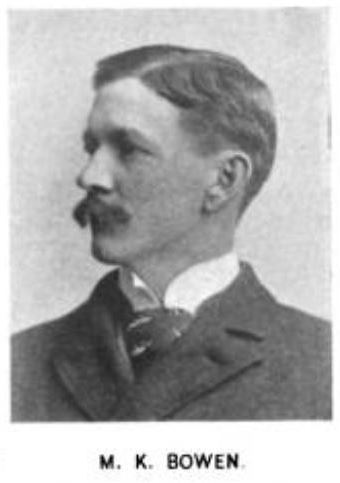
Bowen, Mennard Kener
From the May, 1895 Street Railway Journal, page 313.
M. K. Bowen, superintendent of the Chicago City Railway Company, was born December 10, 1856, at Jefferson Barracks, Mo. He commenced the practice of civil engineering, by acting as engineer of the city of St. Louis. During 1883, he was appointed engineer on surveys and construction on the lines of the St. Louis & San Francisco Railroad, also on the Iron Mountain Railroad. From 1883 to 1887, he was United States assistant engineer on surveys and construction, and was stationed at New Orleans, La. It was in the latter year that Mr. Bowen first became connected with street railways, being appointed chief engineer and superintendent of the Kansas City Cable Railway, of Kansas City, Mo. He remained with this company for four years, during which he raised the system to a high state of efficiency and improved the operation to a marked degree. Early in 1891, he resigned this position to enter the electric railway field, being appointed agent in New York City for the Short Electric Railway Company. Later in the year, however, he was offered and accepted the position of superintendent of the Chicago City Railway Company, which office he now holds. In this capacity Mr. Bowen has had opportunity to show the executive ability which he possesses, and has met with well deserved success in the operation of this line. |
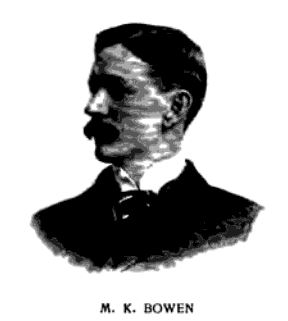
From the May, 1899 Street Railway Journal, pages 334-335.
Menard Kenner Bowen. president of the Chicago City Railway Company, died on Sunday evening, April 9. shortly after an operation for acute appendicitis. He left his office Friday afternoon in his usual health, intending, the following day, to start for Colorado Springs upon a holiday, but in the evening severe pains came on and at a consultation of physicians at midnight, the trouble was recognized as appendicitis and in an advanced stage, and it was determined to remove him to the Chicago Hospital for an operation. This was performed Saturday morning at an early hour, but the disease had progressed too far to be checked, and although the patient rallied after the operation and made a hard struggle for life, the end came at about nine o'clock Sunday evening. The funeral on Wednesday was one of the most impressive ever seen in Chicago, by reason of the presence in the assembly at Mr. Bowen's residence of many hundred street railway employees, as well ai some of the wealthiest and most prominent citizens of Chicago. An escort of 800 men in the train service department of the Chicago City Railway, with the band of the Cottage Grove Avenue Trainmen's Association playing a funeral march, accompanied the body to the train for Jackson, where it was to be interred. The entire procession was over half a mile long. Mr. Bowen leaves a widow and two children, twelve and four years old, respectively. It is probable that few street railway managers have so fully won the confidence and affectionate regard of their employees as M. K. Bowen. When he became superintendent of the Chicago City Railway in 1891, it was determined by the employees, then a rough, heterogeneous mass of men of all nationalities, and practically all members of labor unions, to make the new superintendent's work as hard as possible, and, in fact, to "run him out of town." Instead of accomplishing this, the unruly element was weeded out, and a strong and coherent body of employees was formed, which quickly came to look upon Mr. Bowen as an absolutely fairminded, straightforward man, on whose sense of justice they could rely and whose magnificent ability as an organizer and manager they could admire. Mr. Bowen has rarely failed in carrying out any plan which he had at heart, and his directors recognized his services by advancing him from the position of superintendent to that of general manager, and eventually of president of the company -- a company, one of the strongest and most prosperous in the United States. It is characteristic of the man that when early on Saturday morning he knew that the operation must be performed, and realized as others did not that the result of his long struggle of years against disease was likely to be fatal, he put aside his own pain and trouble long enough to send for Superintendent Nagle. of the Chicago City Company, to whom he gave some final directions concerning its management, and bade farewell. Mr. Bowen was a man in the prime of life, being but forty-one years of age. His father was Gen. John S. Bowen. a graduate of West Point, and his grandfather. Pierre Menard, first Lieutenant-Governor of Illinois. He was educated at St. Louis and Washington Universities, and at the age of nineteen, entered the Government service as assistant engineer in civil engineering work on the Mississippi River. In 1880 he was engineer in charge of the topographical survey of the St. Louis & San Francisco Railway from Fort Smith. Ark., to California. He first became identified with street railway work in Kansas City, becoming chief engineer and superintendent of construction for the Kansas City Railway Company, then building its cable line. A little latrr he became the New York representative of the Short Electric Railway Company, and in 1891 entered upon his eight years' service with the Chicago City Railway Company. During his connection with this system Mr. Bowen was instrumental in bringing about important changes and extensions. The methods of conducting the business of the company were revised, new lines constructed, old ones rebuilt, and the motive power changed to electricity on all but the trunk lines, which are operated by cables. Mr. Bowen himself made no pretensions to inventive genius, nevertheless he demonstrated his ability to design and improve methods, and his opinion on all matters pertaining to street railway management had come to be highly regarded. To his many friends in street railway circles. Mr. Bowen's death causes grief as at the loss of a close personal friend. He was singularly winning and generous in his friendships, granting to all credit for the best intentions and rarely taking offence. An unkindly word of another was almost unheard from his lips, for his principle in life seemed to be to "think no evil of any man." He was a rare character and a friend long to be remembered among those who enjoyed his friendship. |
Go to top of page.
Britton, Joseph
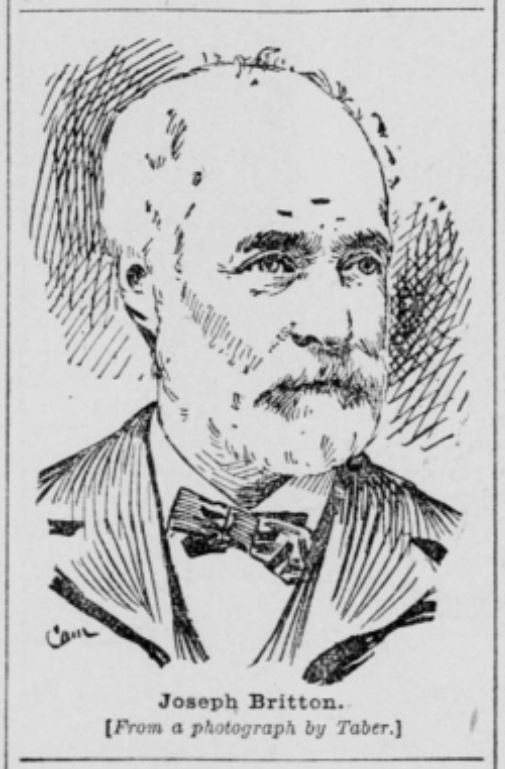
Joseph Britton was one of Andrew Smith Hallidie's partners in the Clay Street Hill Railroad. Briton was a lithographer who founded the firm of Britton and Rey. He died on 19-July-1901.
From the 26-April-1895 San Francisco Call, page 8.
Joseph Britton has been known to almost all prominent San Franciscans. His life for the last forty-five years has been spent in this city. He is English by birth and is 70 years of age. He arrived in New York when 10 years of age and came to San Francisco in 1849. Like all the pioneers he first went to the mines, but as he did not realize his expectations he turned to his trade, that of a lithographer. In 1852 he started the lithographing house of Britten & Rey, which has existed until the present day. Mr. Britton was one of the four men who revolutionized the streetcar business of the world. With Hallidie, Davis and Moffatt (Moffitt - JT) he was connected with the building of the Clay-street cable road, the first of its kind in the world. Joseph Britton was an earnest sympathizer of the Vigilance Committee, though not a member of that body. He was a prominent member of the political organ ization known as the People's party, which was the outcome of the Vigilance Committee. As a candidate of that party he was elected Supervisor, and at the time of the Civil War introduced the resolution pledging the city of San Francisco to the Union and did all in his power to hold it as a loyal state. Mr. Britton owns considerable property in this City and some tracts in neighboring counties and across the bay. He owns stock in the large printing establishment of Palmer & Key. Mr. Britton has been a prominent man in recent political matters and has gained considerable fame as a member of the Non-Partisan party in local politics. According to the assessment roll Mr. Britton pays the following taxes: A lot on the southwest corner of Green and Taylor streets, a fiftv-vara lot, assessed at $1700, on which he pays $26 62 taxes; a lot in Jerome alley, near Pacific street, assessed value $540, taxes $8 46; a lot on Sansome street, near Sacramento, assessed as follows: Real estate $9650, improvements $11,500, total $21,150, taxes $331 40. The firm of Britton and Rey is assessed as follows: A lot on the southwest corner of Commercial and Leidesdorff streets, value of lot $11,100, of improvements $10,750, total $21,850, taxes $342 38; a lot on the southeast corner of Union and Taylor streets, assessed as follows: Real estate $6220, improvements $1350, total $7570. taxes $118 62; twenty-eight lots in the O'Neil & Haley Tract, assessed value $360, taxes $5 62. |
From the 19-July-1901 San Francisco Call, page 14.
JOSEPH BRITTON, distinguished as a public-spirited citizen, died last evening at the ripe age of 76 years at his residence, 829 Union street. Death was due to a general breaking down of the system, but to the last Mr. Britton maintained his mental vigor to a remarkable degree. Though he was confined to his bed for some weeks he took the liveliest interest in municipal affairs and each day he would ask his nephew or one of his nieces to read to him the latest news. As the "father of the San Francisco charter" Joseph Britton will be ever known to fame, not only In this city but all over the United States. His unselfish spirit was shown In his refusal of many offices tendered to him during his long residence in this city. He labored for the welfare of the people and lived to see the accomplishmnt of one of his most cherished plans. Joseph Britton was born in Yorkshire, England, in 1825. He came to the United States when a lad and the news of the discovery of gold in California led him to join the Argonauts in 1849. He joined the George Gordon party and sought the El dorado of the Pacific with other hardy spirits. The party left New York by steamer and came to this coast via the Panama route after a most perilous journey. Until 1852 Britton lived in various mining camps and then came to San Francisco. In this city he met J. J. Rey and with him established the firm of Britton & Rey, lithographic printers. This firm exists to-day as one of the most stable business concerns of the Pacific Coast. Joseph Britton was never married. His sister married his partner, Rey, a few years after she came to California to join her brother. Mrs. Rey died a few months ago. Her husband died some years ago, and was succeeded in the firm of Britton & Rey by his only son, V. J. A. Rey. Mr. and Mrs. Rey were survived by this son and three daughters, who watched by the bedside of Joseph Britton with unceasing care, until be was called to his eternal rest. When the vigilantes of '49 determined to rid the new city of the West of the criminal element Joseph Britton was a leading figure axnong the reformers. When A. S. Hallidie Invented the cable road Joseph Britton was one of his most earnest supporters. With the inventor, James Moffitt and Henry L. Davis, Britton built the Clay-street cable road -- the first cable road in the world. In the early '50's and in 1870 Joseph Britton served as a Supervisor of this city. For many years Mr. Britton devoted his entire energy to forming the Taxpayers' party, which afterward grew into the committee of freeholders that drafted the charter for San Francisco. By unanimous vote Mr. Britton was elected president of the committee of freeholders, and he steered the child of his brain through many perilous storms and squalls until it was accepted by the majority of the voters of the municipality. Joseph Britton waged a fight against the Central Pacific Railroad Company when the company sought to secure Goat Island and when it tried to get an eastern entrance into San Francisco to the exclusion of any other transportation line. At another time he fought the proposition of the same railroad to secure a right to a spur track through Golden Gate Park. No arrangements have been made for the funeral services, but it is expected that the obsequies will be of a semi-public character. |

Go to top of page.
Brooks, Benjamin H
|
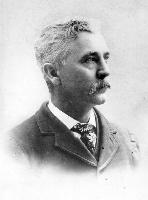
| Benjamin H Brooks (Source: SF Public Utilities Commission). |
Benjamin H Brooks was the first person to propose a cable railway in San Francisco.
Brooks, the son of a ship owner and captain, was a successful attorney. He was the first lawyer in the state who would take the cases from Chinese clients.
City records show that Brooks was granted a franchise for a cable line in 1870, along with C S Bushnell, E W Steele, and Abner Doubleday (the man who didn't invent baseball in Cooperstown, NY). They proposed a long system from downtown on various streets out to Cow Hollow. Brooks and engineer W H Hepburn worked out many of the mechanical details of the system. Brooks and his associates were unable to find financing, and Brooks' legal business was time consuming, so they sold their franchise to Andrew Smith Hallidie, a wire cable manufacturer.
Go to top of page.
Colam, William Newby
Thank you to John Colam, a cousin of William Newby Colam, for providing the photograph and the biographical information.

|
William Newby Colam. Click on the image for a larger view. Photo provided by John Colam. All rights reserved. |
William Newby Colam was a British civil engineer who was heavily involved in building cable tramways. He was born on 13-December-1853 at Hackney, now a borough of London. He died on 06-February-1930 at Hove, near Brighton. Sir Harold Nugent Colam, his son, was also a civil engineer, who was an important figure in the railway system of India. I have found several articles written by William Newby Colam, mostly as papers presented at meetings of the Incorporated Association of Municipal and County Engineers. In this he reminds me of my father, who was very active in the Association of Engineering Geologists, frequently presenting papers at their monthly and yearly meetings. In 1891 Colam was President of the Society of Engineers.
Colam was involved in the design and building of the first Hallidie-type cable tramway in Europe, London's Highgate Hill Cable Tramway. He wrote about the line in his 1885 paper Cable Tramways.
Colam was the designer and engineer of the Edinburgh Northern Cable Tramways. He wrote about the company's lines in his 1890 paper Edinburgh Northern Cable Tramways. In 1897, he wrote a follow-up article entitled Conversion of Edinburgh, Leith and Portobello Horse Tramways Systems Into Cable Traction.
Colam designed the cable tramway in Matlock.
I chose to list him as Colam, Willian Newby rather than Newby Colam, William because I found several references that called him "Mr Colam" rather than "Mr Newby Colam."
Go to top of page.
Casebolt, Henry
Henry Casebolt was born in Virginia. He came to California in 1851 and established himself as a builder and inventor. He built houses, carriages, and street railroad cars. He served as the contractor for the Sutter Street Railroad (later Railway) and wound up as the principal owner when the promoters defaulted.

|
Henry Casebolt (Source: San Francisco Morning Call, Saturday, September 24, 1892). |
Casebolt designed the famous horse-drawn balloon car for the Sutter Street Railway. The body of this car sat on a pivot, so the car could change ends without a turntable. The cars were attractive to look at, but terrible to ride in when the pivots became worn and the cars became wobbly.

|
Casebolt's 1876 balloon car. (Source: San Francisco Public Library, San Francisco Historical Photograph Collection, AAC-8118). |
The Sutter Street company was not financially successful as a horsecar line. Casebolt saw Hallidie's success with the Clay Street Hill Railroad and proposed that Sutter Street adopt cable technology. Casebolt and his board opened negotiations with Hallidie and his backers. In a preview of patent wars to come, Hallidie demanded $50,000.00 a year and a healthy royalty for each grip used in return for a license to use his patents. Casebolt dropped the negotiations and produced his own grip, with the help of engineer Asa Hovey.
Casebolt and Hovey's side grip with lever control was better than the Hallidie wheel-operated bottom grip.
Beyond just building a better grip, Casebolt deserves recognition for having the idea that cable propulsion could work on flat streets as well as on steep hills.
Casebolt sold his interest in the Sutter Street Railway on 28-January-1880.
One of Casebolt's interesting later projects was his "Elevated Railroad", a short line built in Piedmont to demonstrate an overhead cable line. It was not successful.
Henry Casebolt died at his home on Pierce Street on 23-September-1892. Read his obituary from the Daily Alta California.

|
I took this photo of Henry Casebolt's home, now numbered 2727 Pierce Street, on 22-March-2010. |
|
From the 1890 Langley's San Francisco Directory at
San Francisco Genealogy, page 290:
Casebolt, Henry, r. 2700 Pierce I also noticed this listing: Casebolt, Simon M., car repairer Sutter St. Ry, r. 2528 1/2 Sutter |
|
From The Hub, November, 1892, page 303:
HENRY CASEBOLT, who constructed the original Sutter-st. railroad, died at his home, San Francisco, Cal., Sept. 22, at the age of 76 years and 8 months. Mr. Casebolt was one of the best known of the older residents of San Francisco. He was born in Virginia, where he lived until 1852, when he came to California. His trade was that of a blacksmith and he opened here a shop, which was at once overrun with business. He soon established a large carriage factory and later entered into contracts for building country roads. In all his undertakings he was very successful and amassed a considerable fortune. In 1862 he projected a street railroad from the ferries up Sutter-st. to the sand hills in the Western Addition. As his scheme was thought to be in advance of the times, Mr. Casebolt was compelled to furnish the money for the road, which received a charter in 1863. In 1881 he sold out his interest in this road, and since that time has devoted himself to superintending his carriage business and his patents. His death was very sudden. The day before he died he was in town attending to his affairs, though he complained of not feeling well. He leaves a widow, three sons and four daughters. |
From the May, 1895 Street Railway Journal, page 312.
Henry Casebolt, one of the pioneers of cable railways, was born in Virginia in 1816, and moved to California in 1852. He was an incorporator of the Front Street, Mission Street & Ocean Railway Company, which was chartered in 1873. This was one of the earliest lines in San Francisco, and the predecessor of the Sutter Street Railway Company. As soon as the cable had proved successful on the Clay Street line Mr. Casebolt determined to introduce his system on the Sutter Street line, and planned and engineered the entire work. In the course of this work he invented a number of appliances which brought about marked economy. For these improvements he took out a number of patents. Mr. Casebolt died September 23, 1892. |

Go to top of page.
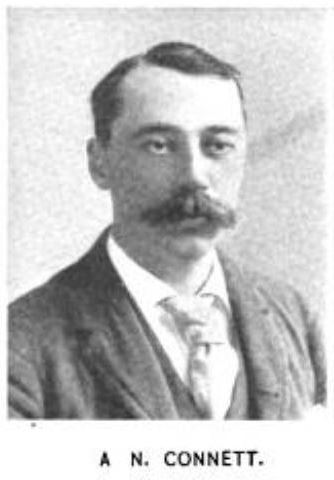
Connett, AN
From the May, 1895 Street Railway Journal, page 318.
A. N. Connett, at present chief engineer of the Metropolitan Railway Company, of Washington, D. C, was born in Connecticut, in 1859, and was graduated from the Rensselaer Polytechnic Institute, of Troy, N. Y.. in 1880, as civil engineer. He entered the street railway field in the early part of 1888, with Knight & Bontecou, of Kansas City. After the completion by that firm of the 18ih Street line of the Metropolitan system of that city he supervised the construction of conduit electric railways for the Bentley-Knight Company, in Allegheny City, Boston and New York: Afterwards he acted as assistant engineer to Daniel Bontecou on the construction of the 7th Street cable line, of Washington, D. C, and upon the completion of this line was made principal assistant to F. H. Hambleton in the construction of the Druid Hill cable line of the Baltimore Traction Company. After the completion of this line Mr. Connett was connected for some time with the engineering corps at work on the Broadway cable railway, New York, and while so engaged was appointed chief engineer of the Baltimore City Passenger Railway. During the three years in which he was connected with this company, he reconstructed the entire system, installing twenty-two miles of cable railway, with three power stations and twenty three miles of electric railway, including one of the largest electric power stations in Baltimore. Upon the starting of the cable lines, he was appointed general manager in addition to chief engineer. Mr. Connett has always manifested a preference for engineering work rather than the duties of operation, and so accepted a short time ago the position which he now holds. His plans for an electric railway conduit in Washington have been published in these columns and are familiar to our readers. |
Go to top of page.
Davis, Henry L
Back in 2009, San Francisco Sheriff Mike Hennessey contacted me. He was setting up a page on the Sheriff's Department website with an image of each sheriff who had served since the department was founded in 1850. One man he couldn't find was Henry L Davis, who served as sheriff from 1864-1867. I found not one but two woodcuts in digitized issues of the San Francisco Call.
Henry L Davis was one of Andrew Smith Hallidie's partners in the Clay Street Hill Railroad.
From the 26-April-1895 San Francisco Call, page 8.
HENRY L. DAVIS. Henry L. Davis is a native of Rhode Island, 68 years of age. After passing through the Mexican War, he came to San Francisco in the spring of '50, and has since been identified with various business interests in this city. Mr. Davis left his home in Rhode Island at the age of 13 to strike out for himself. He first went to South Carolina. On his arrival in San Francisco he went to the mines, but being unsuccessful he returned to San Francisco and engaged in the shipping and commission business. In 1857 he became a Deputy Sheriff and in 1864 he was elected Sheriff and served four years in that position. He was one of the organizers of the National Bank and Trust Company and was president of it during its existence. At the present time Mr. Davis is president of the California Optical Company, which he started in 1888. He is secretary and treasurer of the California Wire Works, and has held this position since the organization of the company in 1882. He is also president of the Board of Manufacturers and Employers of California and also president of the Masonic Hall Association. He has numerous other business connections, but has deeded nearly all of his property over to his children, believing in leaving no property to be fought for after his death. The assessment roll shows that he owns but ten lots in Gift Map 4, with a total assessed value of $220. |

Go to top of page.
Diescher, Samuel
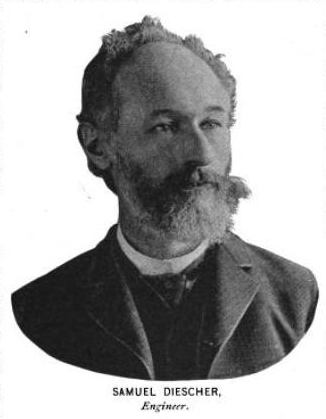
"American Inclined Plane Railways," by Samuel Diescher, Cassier's Magazine, June, 1897.)
Go to top of page.
Duncan, George S
Civil Engineer George Smith Duncan built the first cable car line outside of San Francisco, the Roslyn Tramway in Dunedin, New Zealand. To get around the Cathedral of Saint Joseph, he was forced to develop the pull curve, which allowed cars to hold the rope while passing through a curve on a grade. The pull curve allowed the cable car to spread to cities that did not have San Francisco's straight streets.
Duncan went on to design the cable tram lines in Melbourne. There he developed the slot brake, an important safety measure to deal with runaways and loose strands. He later advised Brisbane to use electric rather than cable traction for their tramways.
Duncan was a native of New Zealand. Duncan died on 04-September-1930.
Sources disagree as to his middle name. Some accounts have "George W Duncan", others have "George S Duncan". I went with the majority.
|
From the Melbourne Argus, 08-September-1930, page 8.
Mr. George Smith Duncan, M.Inst.C.E., London, formerly chief engineer to the Melbourne Tramways Trust, and consulting engineer to the Melbourne Tramways and Omnibus Company, died at Sunnyside, Black Rock on Thursday, September 4. He had been in failing health for some years Mr. Duncan, a son of the late Mr. George Duncan, a leading business man of Dunedin N.Z., was born in 1853 and was educated in Scotland and at Clifton College, England. Returning to New Zealand he went through a five years' engineering course under Messrs Thompson and Simpson of Otago, and two years later he was appointed to the position of provincial engineer of Otago Engaging in private practice in 1876, Mr. Duncan carried out a number of important works including the laying of the Roslyn and Mornington cable tramways in 1883. At that time only a few cable tramways had been laid, and this system of traction, as Mr. Duncan found it, was most primitive. Other tramways had all been laid in a straight line, as the problem of carrying the hauluge cables round curves had baffled every engineer. Mr. Duncan solved this problem. At that time a cable tramway system for Melbourne was projected, and the late Mr. F.B. Clapp, then chairman of the Melbourne Tramway and Omnibus Company engaged Mr. Duncan as chief engineer it was he who designed and carried out this large undertaking. Nothing on such a scale had ever been attempted before and when the system was in successful operation Mr. Duncan was recognised by the engineering profession throughout the world as the leading authority on cable traction. It was in recognition of this work that he was appointed a member of the Institute of Civil Engineets. After acting as engineer to the Melbourne Tramways Trust for three years Mr. Duncan again engaged in private practice, devoting most of his attention to mining engineering. He introduced into Australia the cyaniding process. In his later years and indeed almost to the time of his death Mr. Duncan, who was an analytical chemist as well as an engineer, was endeavoring to make practicable a process for extracting the gold which is held in solution in sea water. Working on a laboratory scale he succeeded in extracting considerable quantities of the metal, but at a prohibitive price. Mr. Duncan married Miss Euphemia Kilgour of Dunedin, who predceased him. He leaves two sons and a daughter. Mr. Alfred J. Duncan, who practices as a consulting engineer and who was associated with Mr. Duncan during the years in which he was engineer-in-chief for the Melbourne Tramways Trust and consulting engineer for the the Melbourne Tramway and Omnibus Company, is the only surviving brother. |
Go to top of page.
Eppelsheimer, William E.
William Eppelsheimer was born in what is now Germany in 1842. He studied engineering in Germany.
William Eppelsheimer designed the first cable line in the world, the Clay Street Hill Railroad. He later designed a bottom grip for the Geary Street Park & Ocean Railway that is still used by today's surviving cable cars. He later designed the first cable railway in Europe, London's Highgate Hill Cable Tramway.
|
From the May, 1895 Street Railway Journal, page 312.
William Eppelsheimer was born in Germany in 1842, and after a course in the public schools he was graduated from the Realschule of Kaiserslautern in 1858. The following two years he served in a machine shop as an apprentice, and from 1860 to 1862 he studied railroad and machine engineering at the Polytechnic University in Karlsruhe. After leaving the University he was connected with several large machine and engineering works until November, 1868, when he left for the United States, arriving in San Francisco in 1869. In San Francisco he spent one year in the Union Iron Works, and afterwards took charge of a number of engineering enterprises. In February, 1872, he met A.S. Hallidie, and he was told by the latter of the plan for constructing a cable railway up Russian Hill. In May, 1872, canvassers were sent to obtain from the property owners of Russian Hill subscriptions and donations for the construction of the railway, and a considerable amount was secured in this way. Work was not commenced, however, until June 2, 1873, and on August I, as already stated, a car was run over the whole line, the franchise being thereby secured. The line was then closed for another month for finishing some work which had not been completed. Mr. Epplesheimer acted as engineer of construction, and contributed largely to the success of the line, owing to his engineering and mechanical ability. He was the patentee of a number of the inventions used. He severed his connection with the Clay Street Hill Railway Company in March, 1874, and continued his practice of civil engineering, paying a great deal of time to the study of designs to improve the system of cable railways. In 1879 he built the Geary Street Cable Railway. In the following year he left the United States to introduce the system in Europe, and in 1883 and 18S4 built the Highgate Hill Cable Tramway of London. In 1885 he prepared plans for the construction of the Edinburgh Northern Cable Tramway. He is at present a resident of Kaiserslautern, Germany. |
Feinstein, Dianne

|
Senator Dianne Feinstein (Source: Office of Senator Dianne Feinstein). |
Many years ago, perhaps in 1999, I contacted the offfice of Senator Dianne Feinstein. I remember her participating in the amateur portion of the annual Cable Car Bell Ringing Contest some year in the 1970s, but I could not remember what year. I contacted her office and they could not find out.
Dianne Feinstein was mayor of San Francisco during the Great Reconstruction of 1983-84. Without Mayor Feinstein pushing the project, we might have lost the cable cars.
She was President of the Board of Supervisors and became San Francisco's first woman mayor when Dan White murdered Mayor George Moscone and Supervisor Harvey Milk. She did a lot to help San Francisco recover from the tragedy.
Later she became California's first woman Senator. She wielded immense power as a member of the Judiciary Committee. In her last year or so, before she died on 29-September-2023, she suffered from many health problems. People called for her to resign, but I knew she wouldn't. I had been aware of her since I was in grade school.
Her aunt lived across the street from my parents' house.

|
Mayor Dianne Feinstein riding on a California Street cable car (Source: Office of Senator Dianne Feinstein). October, 2023 Picture of the Month. |
Go to top of page.
Go to top of page.
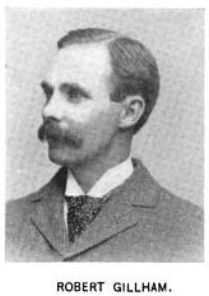
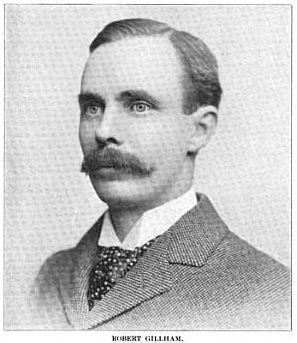
Gillham, Robert
Robert Gillham was born in 1854 in New York. Trained as an engineer, Gillham moved to Kansas City in 1878. He proposed a cable railway to connect Union Depot with Quality Hill. The Kansas City Cable Railway's Ninth Street incline became a city landmark. The company lost his services when a shopman dropped a grip on Gillham's head while he stood in a pit inspecting the cable.
Gillham later built the Eighth Street Tunnel of the Inter-State Consolidated Rapid Transit Company. In 1888, he built the Peoples Cable Railway. In 1891, Gillham designed the Brooklyn Heights Railroad. Gillham also organized and served as chief engineer of many railways, street and mainline. He built the Kansas City, Pittsburgh, and Gulf Railroad, a predecessor of the Kansas City Southern Railroad, and served as its general manager. Robert Gillham died of pneumonia in 1899.
Robert Gillham published Cable Railways: Their History, and Use in America in 1889. The page includes a brief biographical sketch.
Robert Gillham died on 19-May-1899.
From the May, 1895 Street Railway Journal, page 314.
Robert Gillham was born in New York City, September 25, 1854. He was educated at Hackensack, N. J., and in 1874 began the practice of civil engineering in Hackensack, where he met with much success. Mr. Gillham was one of the earliest advocates of cable traction, has contributed much to its general introduction, and has acted as consulting engineer in the installation of a number of roads. A study of the system as introduced in San Francisco, in 1873, convinced him that it could be applied successfully in Kansas City, where the local conditions were peculiarly severe. The road installed here by Mr. Gillham and his associate, W. J. Smith, includes a steel viaduct and other interesting features. Prior to the completion of this railway, in 1883, Mr. Gillham conceived the idea of an elevated railway extending through the western portion of Kansas City, Mo., and into Kansas City, Kan. The present elevated railway was the result. This embraces an elevated steel structure on a portion of the route, and a surface railway over the balance, in all about sixteen miles of railway. The railway was constructed under the direction of Mr. Gillham, who was vice-president and chief engineer, and who designed all the details associated with the work. It was the first steel elevated railway in the country and of original design, the use of cross ties having been avoided. Among other engineering works with which he has been identified are the Omaha cable railway, the Denver City cable railway system, the 16th Street viaduct and the Larimer Street viaduct in Denver, including the deck steel bridges over Platte River; the Montague Street cable railway, Brooklyn, N. Y., and the Cleveland (O.) City cable railway, in which Mr. Gillham was associated as engineer with Col. W. H. Paine. Shortly after the West End Street Railway Company of Boston was formed he was engaged as engineer to report on the feasibility of operating the cable system on several lines of that road, but the Richmond electric road being completed about that time, electric was selected instead of cable power. Mr. Gillham is also a recognized authority on the subject of compressed air, and he has written very extensively on this special subject. He is a member of the American Society of Civil Engineers, President of the Engineers' Club of Kansas City, a member of the Society of Naval Architects and Marine Engineers, and of a number of other societies. He was married in December, 1881 to Miss Minnie Marty, daughter of a prominent capitalist of Kansas City, and is now vice-president of the Kansas City Elevated Railway, and receiver of the North East Street Railway Company, of that city, besides have a large and general practice as a cable engineer. |
From the 26-May-1899 Railway Age and Northwestern Railroader.
Robert Gillham, general manager of the Kansas City Pittsburg & Gulf, died at Kansas City, Mo., on May 19, after a brief attack of pneumonia. He was born in New York City, September 25, 1854, and after attending a private school at Lodl, N. J., completed his studies in engineering at the Classical and Mathematical Institute at Haekensack, N. J. He began practice as a civil engineer at Haekensack in 1874, and in 1870 he went to Kansas City and undertook the organization of a company to build a cable railway. His efforts resulted in the construction of the Kansas City Cable Railway system. including the steep incline extending to the summit of the bluff at the Union depot. He not only secured all the funds for the company, but designed and personally supervised the construction of the road. He was one of the principal promoters of the Kansas City Elevated Railway, being its vice-president and chief engineer, and designed and constructed the system. He also secured funds and built the Eighth street tunnel in Kansas City, which was completed in May, 1888. Among other engineering work executed by Mr. Gillham are the Omaha Cable Railway system, the Denver Cable Railway system, the Sixteenth street and Larimer street viaducts in Denver, the Montague Street Cable Railway at Brooklyn, N. Y., and the Cleveland City Cable Railway at Cleveland, O. Mr. Gillham was a recognized authority on the subject of compressed air, and was engaged to visit Europe to make extensive technical tests in the use of compressed air, the results being a valuable addition to the literature on this subject. In 1893 he accepted the position of vice-president and general manager of the Kansas City Elevated Railway and carried through a plan of consolidation with the system of the Metropolitan Street Railway Company. In 1894 he was appointed receiver of the Northeast Street Railway of Kansas City, which he placed on a paying basis in a trifle over two years. In July, 1895, he accepted the position of chief engineer of the Kansas City Pittsburg & Gulf, which was at that time completed to a point only 230 miles south of Kansas City. He had full charge of the construction of the road to Port Arthur, Tex., 787 miles from Kansas City, and during the summer of 1H97 was appointed general manager of the system, including the Omaha Kansas City & Eastern, Omaha & St. Louis, Kansas City & Northern Connecting, Kansas City Suburban Belt and Kansas City & Independence Air Line, retaining also the title of chief engineer. He constructed the Port Arthur ship canal and had full charge of all the terminal and harbor improvements at Port Arthur. A few weeks ago he was appointed one of the receivers of the Kansas City Pittsburg & Gulf, but subsequently withdrew in the interest of harmony between the opposing factions, and the court which appointed the present receivers designated that Mr. Gillham should continue as general manager. An excellent portrait of M. Gillham was published in The Railwav Age of July 30, 1897. |
Go to top of page.
From the 20-May-1899 Kansas City Journal.
MR. GILLHAM DEAD.Kansas City Loses One of Its Best Friends.SUCCUMBS TO PNEUMONIA.His Death Occaisioned Very General Regret.Mr. Gillham Had Been Identified With Street Railways, the Pittsburg and Gulf and Parks of Kansas City -- He was a Public Spirited Citizen.Robert Gillham is dead. Mr. Gillham died at 5 o'clock last night at his residence, 2105 Independence boulevard, from a complication of pneumonia and appendicitis. He had been ill only six days. Funeral arrangements have not yet been made. Undertaker Stine will have charge and interment will bo at Forest Hill, where Mr. Gillham owns a large lot and where his mother is buried. Last Saturday night he went home feeling chilly. Soon after arriving at home he had three hard chills in rapid succession. He was not alarmed, but thought he was merely bilious. By Wednesday, however, it was apparent that he was a very sick man. and Dr. G. C. Mosher was called in. He at once saw that his patient was suffering from a severe attack of pneumonia. His condition continued to grow worse and Dr. J. D. Griffith was sent for early yesterday morning. Both physicians, Mr. Gillham's wife and two daughters, his brother-in-law, Albert Marty, and Judge C. E. Moss were at the bedside of the sick man all day yesterday. He was conscious until within a few hours .of the end, when he gradually sank into a stupor that terminated In a quiet, sleepllke death. Mr. Gillham, besides being general manager of the Pittsburg and Gulf railroad, had just returned from a laborious trip of ten days over the road with the receivers. The trip had taxed his strength considerably and he had caught cold. His associates believe, also, that the tremendous mental strain that he had been under Tor several months in the management of the Pittsburg and Gulf system, in its straits, had told upon his health and weakened him so that he was an easy prey to pneumonia. He had worried a great deal over the affairs of the railroad, and it was plainly running in his mind when he became unconscious. One of the last things he was heard to say was an almost inaudible muttering about the Belt line, a part of the Pittsburg and Gulf system, and 'then he added distinctly: "Life is too short to bother with all those details." In the afternoon Mr. Gillham was clearly himself, and he discussed with his physicians the advisability of using the oxygen treatment. He spoke of its success in Kipling's case, and said he thought it was a good thing. Later he complained frequently of the difficulty in breathing, and a few minutes before he lost consciousness he looked up at his old business associate, Judge C. E. Moss, and said: "I'm having a pretty hard time." "Yes," said Judge Moss, "but you've been worse off than you are now." Since Saturday Mr. Gillham had taken no nourishment except a little whisky. The oxygen treatment had been used constantly. His death came so suddenly that few knew that he was even ill. At 9 o'clock Rev. Dr. Henry Hopkins, pastor of the church of which Mr. Gillham was a member, called at the residence. He was met by someone at the front steps who informed him that Mr. Gillham was dead. Dr. Hopkins went in and extended consolation and sympathy to Mrs. Gillham, who is prostrated with grief. O. H. Dean, J. McD. Trimble and other intimate friends and associates of Mr. Gillham, learning by telephone of his death, came in later. Robert Gillham was the builder of Kansas City's street railway system. He engineered the street railway systems of all the other large cities of the West. He was not only a skillful engineer, but a promoter and organizer of rare ability. Of late years the Pittsburg and Gulf railroad had occupied the greater part of his attention, but he was interested in nearly every important public enterprite In Kansas City. As a member of the city park board he helped to plan the magnificent system of parks and boulevards of which the city is just coming into possession. In the language ot one of his oldtime friends last night, he had done more towards making Kansas City what it is than any other man. Robert Gillham was born in New York September 25, 1854. He was the third of four sons of John and Clarissa Gillham. His first education was in a private school at Lodi, N. J. When he was IB years old he entered a college at Hackensack. N. J., and studied engineering until 1874. In that year, at the age of 20, he established an office at Hackensack as an engineer. His first work was so thorough and displayed so much ability that he soon had all the sewerage, bridges and other engineering contract work that he could attend to in Hackensack. and was beginning to do work in New York city. It was in October, 1875, that he came to Kansas City. It was then a small town almost inaccessible. The city was reached by a ride up Bluff street to Fifth street in a rickety, slow, painful mule car. Uptown there was a dilapidated horsecar line to Westport, and the present extensive systems then readied no farther than Forest avenue on the East, Twelfth street on the south, and Fifth street on the north. Mr. Gillham at once took hold of Kansas City's street railway problem. He planned the Independence avenue and East Ninth street lines and built them. Then he built the Elevated road to Kansas City, Kas. And all these enterprises were pushed through by him in the teeth of the fiercest opposition. Ninth street had to be widened and other obstacles were thrown in the way of a franchise, by the city council, but Mr. Gillham finally overcame all theso difficulties and carried out the plans that he foresaw would succeed. Mr. Gillham went to work at a salary of $6,000 a year for the Kansas City Cable Railway Company, as it was then called. Soon he was given $10,000 a year, and in a few months Denver and Omaha had employed him to engineer their street rail way systems. He received $10,000 a year from each of these and was soon making from $40,000 to $5O,OOO a year in salaries -- the highest salaried man that Kansas City ever had. On December 1. 1881, Mr. Gillham was married to Miss Minnie Marty, only daughter of Mr. and Mrs. Matthias Marty, a prominent and wealthy family of Kansas City. There are three children, Elsie and Edith, 17 and 15 years old and a little son 3 years old. The Gillham residence at 2106 Independence boulevard, the property of Secretary Alger, is one of the handsomest on the East side. His father, a man of over 70, lives at 1301 Belleview. With him lives Robert Gillham's granmother, 94 years of age. Mr. Gillham's mother died last December at the age of 69. Mr. Glllham had always enjoyed good health, though not a strong man physically. Sixteen years ago he met with an accicdent that nearly cost him his life. It was, in fact, a marvel that he recovered. No one thought he could live, and the case was reported in medical journals as being a very unheard of one. He had invented a new street car grip. He got under the cable trenches at the power house to see how one of the new grips worked. While he was watching it the gripman accidentally let the grip fall. It fell upon Mr. Gillham's head, fracturing it in two places, the entire length of the skull. The fractures were bridged over with metallic appliances and after a year's time, in which Mr. Gillham ahstained from any active employment, he had recovered sulficiently to resume his work again. It was to this accident that Judge Moss referred when he told Mr. Gillham he had been in a worse condition than he was in yesterday afternoon. Little had been known of it except among his most intimate business associates, but Mr. Gillham would soon have been connected with one of the 'great Eastern railroad systems had he continued to live. "They had recognized his ability," said Judge Moss. last night, "and negotiations were pending to secure him. Had he lived there is no doubt that he would not have been in Kansas City very much longer. Although it was not publicly known, magnates of the Eastern roads were trying hard to get him. "He had the quickest mind I ever saw," continued Judge Moss. "He could comprehend most any kind of proposition, at a glance. He was a wonderful mathematician, his reputation in this respect being not second even to that of Superintendent Greedwood. of the public schools." Judge Moss' voice trembled and tears came into his eyes as he spoke ot the many other sides of Mr. Gillham's character. "He was always so kind and pleasant, and when business looked discouraging to me he could always figure a way out and cheer me up," he said. Judge Moss and Mr. Gillham were for years the owners of the Armourdale foundry, one of the largest foundries of the West. Both men made a great deal of money out of it. Judge Moss finally selling out to Mr. Gillham for $130,000. At his death Mr. Gillham owned the foundry, in partnership with his brother-in-law, Gus P. Marty. Among the interesting stories told of Mr. Gillham by Judge Moss is one concerning the first cable railway project In Kansas City. Mr. Gillham's first idea was to bring the passengers from the Union Depot up the hill to Main street only. The complete system of cable railway was not planned until later. He decided that $300,000 would be sufficient to do it, and at once set work "boring" his friends to take $1,000 worth of stock apiece in it. It was slow, hard work. Cable Railways were in their infancy then, and even Mr. Gillham's best friends looked upon his scheme as impracticable. But Mr. Gillham would not allow himself to be discouraged. He kept trying to raise the money. W. J. Smith, who was then at the head of the mule car system in Kansas City, started on an Eastern trip from the Union depot one day. He happened to sit down beside Philip Chase, of Lynn, Mass.. who was a passenger in the same car. Mr. Smith called the attention of Mr. Chase to the steep bluff and said: "There's a young engineer, a friend of mine. In Kansas City, that says he can run cars up that hill by machinery, and that $300,000 will do it." Mr. Chase, who was a wealthy capitalist, began to ask questions about Gillham and his plan. Both men became more and more interested and although they were bound for New York city they turned back at Chicago, came to Kansas City, consulted with Gillham and at once put up $130,000 apiece. The result was the Ninth street incline and a cable road to Woodland avenue. The stock soon went soaring upward and Mr. Gillham sold $8,000 worth of it, his share, for $20,000. This was the first bit of money that he made. After that it came fast and easily. At the time Mr. Gillham built the Grandview line and Elevated road, he was worth fully $250,000. He had then been in Kansas City barely ten years and had come here a poor young man. Many thousands of dollars were invested by Mr. Gillham In Grandview property. He had great faith in the future of property there and still held it at his death, but values had depreciated to such an extent that he was not estimated by friends who were asked concerning it last night to be worth so much as $230,000. His salary as general manager ot the Pittsburg & Gulf railroad was $15,000 for the main line and extra amounts for the branches, perhaps $20,000 or $25,000 a year in all. His income from the foundry and from the Elevated road and other enterprises In which he was a large stockholder was considerable. Besides the Kansas City cable lines, Mr. Gillham planned and constructed in 1888 the West End street railway, of Boston, with its seven power houses; eleven miles of double track in Denver, the Omaha system, and lines in Cleveland, Fort Worth, Providence, Brooklyn, Nashville, St. Joseph and Scranton, Pa. He was consulting engineer in the Chicago elevated road building. It was while these vast street railway enterprises were occupying every minute of his attention, and salaries aggregating $30,000 were being paid to him, that Judge Moss Importuned him to help him with the Armourdale foundry. This foundry was furnishing Kansas City with all its Iron work, was making money fast and was giving Judge Moss more than he could attend to. Mr. Gillham said to him: "I'm making too much at this to quit it now. You go ahead with the foundry and just take out whatever salary suits you. I'll be with you after awhile." "And so the foundry ran on for several years." said Judge Moss. "Gillham owned the biggest part of it, but he let me go ahead and pay myself as I saw fit." In addition to the Ninth street incline, one of the greatest engineering feats accomplished by Mr. Gillham was the construction of the Eighth street tunnel. This was declared by many engineers to be utterly impracticable, but within eleven months after ground was broken for it, in 1887, cars were running beneath the high hluffs to the Union depot and across the Kaw into Kansas. Mr. Gillham was a prominent contributor to the leading engineenng and scientinc periodicals of England and America. He received a considerable income from the articles he snatched the time to write, and was much interested in the discussion of scientific subjects. He was on board tho steamer City of Paris three years ago when her piston rods broke In mid-ocean, and everybody expected the ship to go down. Mr. Glllham was the only engineer on board who exactly understood what the trouble was, and it was to his direction that the salvation of the steamship was attributed. When he reached Paris he wrote, by request, an explanation of the break in the machinery, its causes, etc., which was published on both sides of the ocean. With the passing of Mr. Gillham, one of the most unique figures in the railroad world is removed. He was In many ways a remarkable man and possesed a tenacity of purpose that was the fondatlon of his success. It was as a civil engineer that his remarkable proficiency brought him into prominent notice. He is brought into consultation regarding some exceedingly difficult engineering feat to be accomplished in the building of the "Pee Gee." His ideas were lucid and practicable and soon afterward he was appointed general manager of the road. He was absolute in the operation of the line and he brought to bear many features that were new to tho railroad world. In the operation of the Kansas City, Pittsburg and Gulf railroad he kept in touch with all the details and was quick to perceive a weak point and correct it before it had been allowed to interfere with the earning power of the road, and the consequence is that he had the affairs of the railroad within reach all the time and established a system that would enable him to tell the condition of the road at any time. Tho most remarkable thing about his work and connection with the Kansas City, Pittsburg and Gulf railroad was in the conception and final completion of the Port Arthur canal, and when the waters of the Gulf flowed to tho wharf at Port Arthur, there was no man in the country who felt the relief at tho accomplishment of the great work is did Mr. Gillham. As an executive officer he was called into consultation in all matters pertaining in the affairs of the company, and in the days preceding the appointment of receivers he made several trips East to consult with the financiers of the East. The confidence which he enjoyed was never better exemplified than on the day when the petition for the appointment of receivers was presented to Judge Thayer in the United States circuit court. On that day all parties combined In asking Judge Thayer to reappoint Mr. Gillham as receiver of the road. There are $23,000,000 of bonds of the company, and it is estimated that over $20,000,000 was represented in court on that day. The court instructed the receivers to retain him as general manager, a compliment seldom paid to the ability of the head of the operating department of a railroad. The success of the Port Arthur route is In a great measure largely due to the untiring energy of Mr. Gillham. Judge McD. Trimble, who as senior counsel, a director and receiver of the Pittsburg and Gulf railway was associated for so many years with Mr. Gillham. said last night: "Mr. Gillham was one of the brightest and most industrious of men. His capacity for work was unlimited, and during recent years he has performed more work than six men should have done. I am inclined to attribute his sudden death to his nervous condition resulting from overwork. He vas full of zeal and energy and managed his affairs with more than the usual amount of skill. His death is a great loss to the community and to his profession. "The effect of Mr. Gillham's death will he seriously felt on the road of which he was general manager," continued Judge Trimble. "His place will be difficult to fill as he knew every detail of his business. He has done much for the road, possibly more than any other one man. His whole heart was with the railroad, and he gave it his entire time and attention. "It is yet too early to speak of his successor, but it will probably be necessary for Colonel Fordyce, one of the receivers, to manage the operating department before a new general manager is named. I do not think that Mr. Gillham's successor will be an Eastern man. I am inclined to believe that a Kansas City man will be appointed. However. Colonel Fordyce may favor a St. Louis man." Mr. Gillham was an ardent friend and promoter of Kansas City's park and boulevard system, which he helped to plan. He was foremost in all movetnents which had for their object the beautificatlon of the city. He threw himself with all his energy into the work and though almost, if not quite, as busy a man as President Meyer himself he found time to do an immense amount of work in performing his duties as member of the park board, to which he was appointed In 1895. "Mr.Glllham was my personal friend," said President Meyer, of the park board, "and I feel his death as a severe personal loss. But it is Kansas City that loses more than I. Mr. Gillham was one of the best friends Kansas City ever had, and he has done as much toward its growth and progress as any man. He had an immense energy and he devoted it to the work in hand. The park work lay very close to his heart and he gave freely of his time and energy for the city's good. Mr. Gillham was an ideal citizen, and it will be hard to replace such a man. In many respects it cannot be done. D. J. Haff, attorney for the park board said that with the possible exception of Colonel Kersey Coates, the death of Mr. Gillham was the greatest loss Kansas City had ever sustained. "He had been driving sixteen horses abreast for years," said Mr. Haft. "He gave freely of his vitality and there is no doubt that he undermined his strength, at least in part, by the assiduity of his devotion to his duty." Mr. Gillham's services were appreciated and he was serving his third term as a member of the park board, having been appointed originally In 1895 by Mayor Davis, reappointed in 1897 by Mayor Jones and reappointed for a third term last April by Mayor Jones. Mr. Gillham's death Is the third change in the park board within the past few months. Charles Campbell resigned and was succeeded by J. K. Burnham: Simeon B. Armour died and was succeeded by Wllliam Barton. Mr. Gillham's is the second death In the park board within two months. Dr. Henry Hopkins, of the First Congregational church, of which Mr. Gillham was a devout member, was deeply affected at his death. "I married Mr. Glllham. December 1, 1881," he said, "to Miss Minnie Marty, "I found Mr. Gillham, when I came here, one of the stanchest (sic - JT) members of the church." he said, "and he soon became to me the warmest-hearted of friends. As a friend and a church member I came to cherish him more and regard him more highly up to the day of his death." Mr. Gillham was a man who made friends and kept them. He was probably acquainted with more people than any man in Kansas City. His death was a general topic of regretful discussion throughout the city last night. Mayor Jones was astounded when he learned of the death of Mr. Gillham. "It will be impossible for this city to have another citizen who was so deeply interested in the welfare ot the public and who will do more for the good of all," said the mayor. "The citizens of Kansas City will always remember Mr. Gillham particularly for his efficient service on the park board and the great improvements that are now being made will be monuments to the skill and energy of the man who was one of the best citizens that this city has ever known. He was an intimate friend of mine. The loss to the community will be a great one." J. K. Burnham remained with the bereaved family until a late hour. "The people of Kansas City cannot realize their loss." said Mr. Burnham. "Mr. Gillham's death will be felt in business and social circles alike. His generosity and popularity were his prominent traits." Walton H. Holmes, who knew Mr. Glllham most intimately through their association during the growth of the street railway system In this city, said: "Mr." Gillham was a pioneer cable road builder. The result of his hard labor will ever be present. "We owe the construction of many of our most important lines to him. I knew Mr. Glllham most intimately and admired his many excellent traits of character. The street railway business missed him when he assumed the position of general manager of the Pittsburg and Gulf, and he will be missed much more now." Mr. Glllham was a level headed businessman and a prominent member of the Commercial Club. Ex-President William Barton said last night: "I regretted to hear of the death of Mr. Gillham just as I was leaving tho theater. He was highly esteemed by all and was an earnest worker. His death is a great loss to our city, not only in business circles will this be felt, but also on the park board. I was just beginning to feel that I knew him well, since our association together on the park board. I was particularly impressed with his courtesy and consideration." |
Go to top of page.
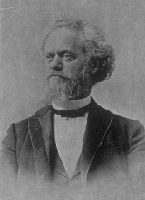
Hallidie, Andrew S
|
| Andrew S Hallidie (Source: [volume 27:group 21:117a], Jesse Brown Cook Scrapbooks Documenting San Francisco History and Law Enforcement, ca. 1895-1936, BANC PIC 1996.003--fALB, The Bancroft Library, University of California, Berkeley. ). |
Andrew Hallidie promoted the first cable line in the world, the Clay Street Hill Railroad.
Andrew Smith was born in London, on 16-Mar-1836. His father, Andrew Smith, held several patents for the manufacture of metal wire ropes. Andrew Smith the younger later adopted the name Hallidie in honor of his uncle, Sir Andrew Halliday, who had been royal physician to King William IV and Queen Victoria.
Hallidie had hurt his health through overwork, so he and his father visited California in 1852. Andrew Smith returned to Britain in 1853, but his son remained in California. Andrew Hallidie mined, surveyed, blacksmithed, and built bridges.
Hallidie became the first person to make wire rope in California, first at American Bar and then, in 1857, in San Francisco. He built many suspension bridges in northern California. His cables were critical elements of suspension bridges, mine hauling systems, and an endless cable ropeway for industrial purposes which Hallidie patented in 1867. An important feature of the ropeway was a "grip wheel", a driving sheave with clips around its perimeter to keep the cable from slipping. Hallidie later used the grip wheel on the Clay Street Hill Railroad.
Hallidie married Martha Elizabeth Woods in November 1863. They did not have children. He became a citizen in 1864.
Various stories claim that Hallidie conceived of the idea of the cable railway while watching horses struggle to haul cars up Jackson Street, from Kearny to Stockton Street. The horses had to be whipped cruelly. They would sometimes slip and be dragged back down the hill.
This may be true, but Hallidie took over an existing proposal for a cable railway from Benjamin H Brooks, who had not been able to find financing for his plan.
In any event, Hallidie built a model cable railway and obtained financing from three partners. He received his first cable car-related patent on 17-Jan-1871. He had surveyed California Street for his line, but decided that it would be less expensive to build on Clay Street, and that Clay Street came closer to the peak of Nob Hill and so would offer a better demonstration of the system. Hallidie and his partners worked hard to sell stock in the line and did not have much success.
The line and the grip which bears Hallidie's name were designed by engineer William E Eppelsheimer.
The franchise demanded that a test run take place no later than 01-Aug-1873. The first test run actually took place early in the morning on 02-Aug-1873, but the city did not void the franchise. Most accounts say that the first gripman hired by Hallidie looked down the steep hill from Jones and refused to operate the car, so Hallidie took the grip himself and ran the car down the hill and up again without any problems.
The line started regular service on 01-Sep-1873 and was a financial success. Hallidie's patents, managed by a Cable Railway Trust, made him rich.
Hallidie used his time and money in many ways to help his fellow citizens.
Hallidie was a founding member of the Mechanic's Institute, which still maintains an excellent library in San Francisco. He was president of the Institute from 1868 to 1878. In 1878, he was a member of the original Board of Trustees of the San Francisco Free Library (Clarke, F. H. , "Libraries and Librarians of the Pacific Coast". Overland monthly and Out West magazine/ Volume 18, Issue 107, November, 1891).
Hallidie was an original Regent of the University of California. He served on the Board of Regents for the rest of his life.
Hallidie ran for the State Senate in September, 1873, at the same time the Clay Street Hill road was going into service. He lost. The San Francisco Chronicle, a Republican newspaper, attacked Hallidie violently in a series of articles:
- Subsidy Hallidie (San Francisco Chronicle, Saturday, August 30, 1873)
- PEOPLE'S UNION/Independent Anti-Monopoly/
LEGISLATIVE/
TICKET (San Francisco Chronicle, Saturday, August 30, 1873) - Subsidy Hallidie (San Francisco Chronicle, Wednesday, September 3, 1873)
- Hallidie Wins (San Francisco Chronicle, Sunday, September 7, 1873)
- Hallidie Loses (San Francisco Chronicle, Friday, September 12, 1873)

|
|
Read a contemporary newspaper advertisement for the "Dolly Varden" ticket: |
Andrew S Hallidie died on 24-Apr-1900. He was buried in buried in Laurel Hill Cemetery, but when that cemetery closed, his body was moved to the common crypt in Cypress Lawn, Colma.
Hallidie was a published author. His works included "The Wire Rope Street Railways of San Francisco, California", an 1881 article from the Scientific American Supplement. This copy was collected by Val Lupiz; with an introduction by Walter Rice.

|
Ad for Hallidie's California Wire Works. |

|
Plaque dedicated to Hallidie and the Clay Street Hill Railroad. It was moved to the lower terrace of Portsmouth Square when the Square was remodeled in 2001. April 2002. Photo by Joe Thompson. |
There is a plaque dedicated to Hallidie and the CSH, on the lower terrace
of Portsmouth Square, near Clay and Kearney. The text reads:
Andrew Smith Hallidie
Site of eastern terminus first street cars in world propelled by cable.
Commenced operation August 1, 1873. Ceased February 15, 1942. Invented and
installed by Andrew S. Halladie, born London, England March 16, 1836. Died
San Francisco, April 24, 1900. Pioneer manufacturer of wire cables, Regent
University of California, twice member Board of Freeholders for drafting
proposed city charter, served on first Board of Trustees, 1878, of the San
Francisco Public Library.
Registered State Landmark No. 500
Tablet placed by California State Park Commission
Base furnished by friends of Andrew S. Hallidie

|
The Hallidie Building on Sutter. September 2001. Photo by Joe Thompson. |
The Hallidie Building at 130 Sutter Street was named in his honor. It has a
unique glass facade. A plaque in the lobby honors Hallidie:
NAMED IN HONOR OF ANDREW SMITH HALLIDIE BORN IN LONDON, ENGLAND MARCH
SIXTEEN 1836 DIED IN SAN FRANCISCO APRIL TWENTY-FOUR 1900- CREATOR OF OUR
CABLE RAILWAY-TWICE MEMBER OF A BOARD OF FREEHOLDERS CHOSEN TO FRAME A
CHARTER FOR THIS CITY-REGENT OF THE UNIVERSITY FROM THE FIRST MEETING OF THE
BOARD JUNE NINE 1868 TO THE DAY OF HIS DEATH-DURING HIS LAST TWENTY-SIX
YEARS DEVOTED CHAIRMAN OF ITS FINANCE COMMITTEE
BUILDER
HALLIDIE BUILDING
CITIZEN
REGENT
A MAN OF INTEGRITY

|
Plaque dedicated to Hallidie at Hallidie Plaza. I had to take the picture at 7 am to be able to avoid the clutter in front of it. May 2002. Photo by Joe Thompson. |
Hallidie Plaza, near the Powell Street cable car terminal, was created during the great reconstruction of Market Street for BART in the 1960's & 70's. There is a plaque with an inscription and an Eppelsheimer bottom grip, near the top of the escalators. The plaque is usually hidden behind the tables of several vendors. The inscription, recently refurbished and rededicated, honors Hallidie:
ANDREW S. HALLIDIE
1836-1900
THIS PLAZA IS DEDICATED
TO ANDREW S. HALLIDIE,
DEVELOPER OF THE CABLE
STREET RAILWAY IN 1873.
HIS INGENUITY GAVE SAN
FRANCISCO THE CABLE CAR,
MEMORIALIZED IN SONG,
DECLARED A NATIONAL
LANDMARK AND FOREVER
LOVED BY THE PEOPLE.
|
From the 1890 Langley's San Francisco Directory at
San Francisco Genealogy, page 587:
Hallidie A. S., president California Wire Works, suspension bridge builder and Patent Endless Ropeway, factory corner Bay and Mason, office 9 Fremont, r. 1026 Washington |

|
For the Centennial year: "San Franciso's 100-Year-Old Folly." An item from the travel section of Newsday shows a drawing of a Clay Street Hill Railroad grip car and passenger dummy. (Source: Newsday (Suffolk Edition), 1973-07-29, Page 95). June, 2023 Picture of the month. |
From the May, 1895 Street Railway Journal, page 311.
Andrew S. Hallidie is universally looked upon as the father of cable railways. To him more than to any other individual belongs the credit of devising the system of cable railways as it exists at present, and of carrying to a successful completion the execution of plans which others had pronounced impracticable. Mr. Hallidie is of Scotch descent, and was born in 1834. His father was an engineer of reputation, the inventor of the wire rope, and during his life took out a large number of patents. When Mr. Hallidie arrived with his father in California he was but in his early teens. He soon developed a taste for engineering, and when but nineteen years of age he designed and completed an important bridge across the middle fork of the American River. He afterwards constructed many bridges along the coast, besides other engineering work. About this time he devised the cable transportation system for mining, known as the Hallidie ropeway. In 1869 Mr. Hallidie turned his attention for the first time to street railways, and early in the following year determined that the application of the principle used in his mining transportation system was applicable to street transportation, but he failed to get financial aid until in 1872. In that year he associated with him Joseph Britton, Henry L. Davis and James Moffit in his work. Clay Street was the route decided upon, and owners of property on that street promised to pay about $40,000 when the road was completed. Messrs. Britton, Moffit, Davis and Hallidie contributed $60,000, and with $30,000 advanced on bonds the road was built. Of the $40,000 promised by property owners only about $28,000 was paid in. In the original road cast iron yokes were used about four feet apart, and the spaces between the top and part way up the sides were encased by sheet iron, the upper portion and surface being protected by timbers and forming a tube about twenty-two inches deep and fourteen inches wide. Timber protected the slot, which had an opening of seven-eighths of an inch, and was placed on one side by a central line about two inches. The gauge was three and a half feet. The grip was made so that the center of the gripping jaw, which took the cable in the center of the tube, and the slides holding the jaws, worked horizontally together by means of a wedge attached to a vertical rod worked up and down by means of a screw and rod in a hand wheel. The grip jaws were provided with guide pulleys which were grooved to fit the cable, and were placed at an angle so as to lead the cable fairly in beside the jaws. The line was three-fifths of a mile long, with an elevation of 328 ft. in that distance, crossed by five streets, many at right angles and with level crossings. The construction of the line was let to Messrs. Martin & Ballard, who employed surprising energy in pushing the work, and the work was done immediately under the direction of Mr. Hallidie. Clay Street is but forty-nine feet wide, and a great deal of work was done in the removal of gas, water mains and water cisterns, which had to be built over and filled up; but all these difficulties were overcome, and the work was completed in about sixty days, or by the end of July, 1873. On the first day of August the franchise under which the work was carried on would have expired, but a single car was run over the track at four o'clock in the morning of that day, proving conclusively that the road would be successful, and securing the franchise. In the afternoon a public trip was made with grip and passenger car. The difficulties encountered and overcome by Mr. Hallidie and his associates were many, and it was only owing to the indomitable perseverance of these men that a successful outcome was finally reached. The history of these early trials in San Francisco forms a most imporlant chapter in street railway development, but owing to the necessary limits of this article we have been able to give only a brief outline of them. The history of cable railways since the opening of this first line is familiar to our readers. Mr. Hallidie has devoted himself since 1873 to the improvement of the cable railway system, and has taken out some 115 or more patents for cable improvements. As head of the California Wire Works which, has been built up by his brains and enterprise, he has also done much to advance cable railway practice by improvements introduced in the construction of wire ropes. Mr. Hallidie has also taken a most prominent part in public enterprises on the Pacific slope, and is an active member of a large number of scientific societies and public institutions, and there have been few undertakings of a public nature with which he has not been identified. From 1868 to 1878 he was president of the Mechanics' Institute, and now again presides over its destinies. He has been a regent of the State University since its start, is vice president of the American Protective Tariff League, a member of the American Geographical Society and of the American Society of Inventors, an active spirit in the local Board of Trade and the Chamber of Commerce and a trustee of the Lick Mechanical School. He is a broad, public-spirited man, and it would be difficult to find one who is more justly esteemed and more generally respected in San Francisco than is he. |


|
Rick Laubscher of today's Market Street Railway served as the emcee of the Sesquicentennial Kickoff Celebration. He introduced little guy in the brown suit, who is cable car promoter Andrew S Hallidie. Hallidie explained that the geniuses at Stanford had brought him back for this event. Steve Johnson stood in for Hallidie, who could not be there in person that day. |
Go to top of page.
Harris, James W
James W Harris served the California Street Cable Railroad from 1879, shortly after it began service, until at least 1940. He was in charge of the construction of the O'Farrell/Jones/Hyde line and the Jones Street Shuttle. He repaired the line after the 1906 Earthquake and Fire. He eventually became president of the company.
From the May, 1895 Street Railway Journal, page 312.
J. W. Harris, superintendent of the California Street Cable Railway Company, of San Francisco, Cal., is one of the oldest cable railway men in point of experience in the United States. He was born in Nova Scotia in 1854, but moved to San Francisco in 1875. In April, 1879, he was employed on the construction and extension of the California Street railroad, and has been in the employ of the company ever since. He has held the offices of car repairer, master mechanic and superintendent, to which he was appointed in 1885. Under Mr. Harris's supervision a great deal of the constructio work of the California Cable Railway Company has been carried on, including the crosstown line, known as the Hyde Street railway, built in 1890 and 1891. |
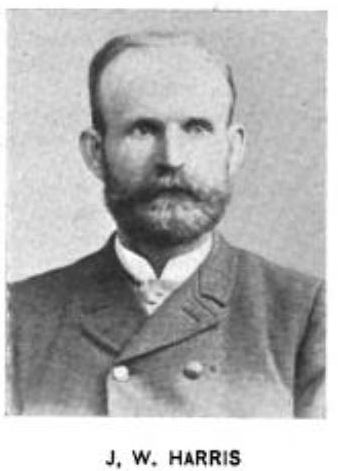

|
President JW Harris of the California Street Cable Railroad standing in front of a car, perhaps at Presidio Avenue, with the refined and original versions of the Root single jaw side grip used by the line. Mr Harris started with the company as a manual laborer in 1879 (Source: "Cable Car Days in San Francisco", Edgar M. Kahn, 1944). Aug, 1997 Picture of the Month. |
Go to top of page.
Harvey, Charles T

|
William Ratigan's children's book, Young Mister Big: The Story of Charles Thompson Harvey the Young Traveling Salesman Who Built the World's Mightiest Canal, published in 1955. |
Charles Thompson Harvey (no relation), born in 1829, was a self-trained civil engineer. In 1852, while Harvey was in Northern Michigan recovering from a bout of typhoid, he heard that Congress had passed an act granting 750,000 acres of federal land to any company which could build a canal around Saint Mary's Falls, which connect Lake Superior and Lake Huron.
Harvey went to his employers, the Fairbanks Scale Company, and persuaded them to build the canal. Despite the fact that he was a salesman and accountant, he became the primary contractor and engineer. Learning on the job, he built the Sault Sainte Marie (Soo) Ship Canal, which opened in 1855. Harvey and his wife, Sarah Van Eps, settled in the Upper Michigan area and founded the town of Harvey. Their home, the Bayou House, still stands.
In 1867, Harvey, apparently a resident of Yonkers, New York by that time, designed and promoted a cable-driven passenger railway, the West Side and Yonkers Patent Railway. Demonstrated on 07-Dec-1867 and opened on 01-Jul-1868, the West Side and Yonkers was the first elevated passenger rapid transit line. For various reasons, it was not a success.
Harvey's finances were wrecked, along with those of many other people, on Black Friday, 24-Sep-1869, when Jay Gould and Jim Fisk's attempt to corner the gold market shattered the American economy.
Charles T Harvey died in 1912.
From Compton's Online:
"Harvey, Charles T. (1829-1912), U.S. civil engineer; directed construction
of the first Sault Sainte Marie canal, which was completed in 1855; built
elevated railway line in New York City."

|
One of the locks on Charles T Harvey's Soo Canal. |
Go to top of page.
Hellman, Isais W
|
I W Hellman, banker and co-promoter of the Los Angeles Cable Railway (Source: [volume 27:group 6:33a], Jesse Brown Cook Scrapbooks Documenting San Francisco History and Law Enforcement, ca. 1895-1936, BANC PIC 1996.003--fALB, The Bancroft Library, University of California, Berkeley). |
Isais W Hellman, who promoted the Los Angeles Cable Railway, was born in what is now Germany in 1842. He came to Los Angeles in 1859 and became a dry goods merchant. Like many industrious merchants, Hellman drifted into banking. He was president of the Nevada Bank from 1890 to 1898, the Nevada National Bank from 1898 to 1905, and Wells Fargo/Nevada National Bank from 1905 until his death in 1920. The bank operated from his home on Jackson Street after the main branch was destroyed in the 18-Apr-1906 Fire and Earthquake. From 1893 to 1916, he was president of the Union Trust Company, which merged with Wells Fargo in 1924. His son and grandson were later presidents of Wells Fargo Bank.
This Date in Wells Fargo History
February 4, 1893.Isaias W Hellman was modest in his personality, but not in his dreams. From 1859 to 1920, respected California banking historian Ira Cross declared, Hellman was "one of the outstanding financial forces in Southern California, and participated in laying the solid foundations for its subsequent prosperity." Three years after moving to San Francisco, Hellman incorporated the Union Trust Company, "the first bona fide trust company," in Cross's opinion, on the Pacific Coast. With California's stable, diversified, and complex economy, men and women of means needed sound financial advice for themselves and their heirs. Within a year, UTC had $1.5 million in trust accounts, when $15 million was good assets for a commercial bank. At the close of 1923, it merged with Wells Fargo Bank.
Go to top of page.
Hilton, George W

|
George W Hilton was a professor of economics who frequently wrote about transportation. I was going through the shelves at the Richmond Branch Library in San Francisco one day in the early 1970s when I noticed a new book, The Cable Car in America by George W Hilton. This book differed from other books I had read about railroads and streetcars. Hilton carefully explained not only the technology and the history, but the economics that first made cable traction desirable and then made them obsolete. Hilton was not interested in nostalgia.
Later I found other books he had written, including The Interurban in America and The Narrow Gauge in America. He followed the same pattern in dealing with those industries.
I can safely say that if it were not for The Cable in America, I would not have created this website.
Professor George W Hilton died on 04-August-2014. I'm sorry I never got to meet him.
Go to top of page.
Holmes, Charles B
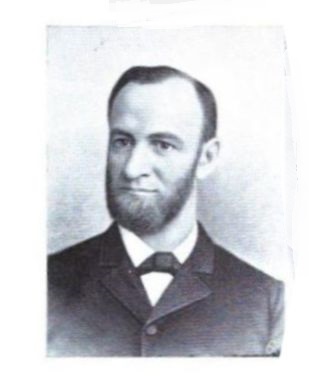
|
Charles B Holmes (Source: The Street Railway Journal December, 1891). |
Charles B Holmes, president of the Chicago City Railway, became interested in cable propulsion, which had not spread to other US cities beyond San Francisco. Holmes visited San Francisco in 1880 and was impressed. He licensed the cable trust's patents and secured the services of Asa Hovey, who had designed the Sutter Street Railway. Holmes had faith that cable technology could work in a harsher climate than San Francisco's.
The Chicago City Railway became the most successful operating company in the industry.
Holmes gave an early interview while the company was making the transition from horse cars to cable cars on State Street:
In 1889, Holmes purchased a three quarter interest in the Los Angeles Cable Railway from Isais W Hellman and James F Crank. Holmes reorganized the company as the Pacific Railway. Augustine W Wright of Chicago designed the system using patents controlled by the industry trust.
The Pacific Railway was unsuccessful and Holmes was financially ruined.
Go to top of page.
Holmes, Conway F
Conway F Holmes and his brother Walton H Holmes founded the Grand Avenue Railway of Kansas City and wound up as major stockholders in the merged Metropolitan Street Railway.
|
From the February, 1902 Successful American, page 95-96.
GENERAL MANAGER METROPOLITAN STREET RAILWAY, KANSAS CITY, MO.
CONWAY F. HOLMES, youngest child of Nehemiah and Mary Holmes, was born in 1864, in Kansas City, Missouri. He was educated in the schools of that city and in the business college at Poughkeepsie, New York. Following the example of his brother, Walton H., while yet a lad he entered the street railway service, and, with natural aptitude and ambition to excel, became familiar with the practical administration of all its various departments. In 1886, before he had arrived at age, he became Superintendent of the Grand Avenue Railway Company. Popularly known as the "Boy Superintendent," he commanded entire confidence and respect in recognition of his abilities. In close touch with his brother, to whom he was subordinate little more than nominally, he heartily seconded his every effort, and divided with him responsibility in important transactions. He was particularly serviceable in forwarding the plans of the brother for the first street-railway consolidation, and the subsequent merging of nearly all the Kansas City lines in the Metropolitan Street Railway System, of which he became General Superintendent when the consolidated organization was effected, and is now General Manager. In addition to his duties in connection with the street railway service, he is an active Director in the Kansas City State Bank, and President of the Kansas City Electric Light Company, having been elected to the latter position January 1, 1900. In October, 1898, he was elected Vice-President and a member of the Executive Committee of the American Street Railway Association, and has the distinction of being the youngest member ever elected to that office. There is marked resemblance between him and his brother in both business and social traits. With excellent executive powers, he accomplishes a purpose with great exactness and promptitude, and with little display of authority, in every detail giving unspoken assurance of a fully informed and determined mind. In social affairs he shares equally in pleasures and responsibilities, without affectation, out of desire for beneficial recreation and to contribute to the entertainment of his associates. Mr. Holmes was married, in 1885, to Miss Maud Gregory, daughter of W. L. Gregory, the first Mayor of Kansas City, and founder of the Gregory Grocery Company, one of the pioneer wholesale houses in that line. In June, 1890, he became Vice-President of this concern. A son and a daughter were born of this marriage; the former, William Gregory, at thirteen years of age, is giving attention to work and study in the electric shops of the Metropolitan Street Railway Company. |

Go to top of page.
Holmes, Howard C

|
Howard C Holmes, engineer (Source: The National Cyclopaedia of American Biography, Supplement I, 1910). |
Engineer Howard Carleton Holmes was born in Nantucket, Massachusetts on 10-June-1854. He came to San Francisco when he was 5.
Holmes designed the Ferries & Cliff House Railway's lines. According to an obituary in The San Francisco Bay Marine Piling Survey, Second Annual Progress Report (1922), he was also involved with building the Presidio & Ferries Railway, the extension of the California Street Cable Railroad to Market Street and the new O'Farrell/Jones/Hyde line, the Portland Cable Railway, the Spokane Cable Railway, and the Madison Street Cable Railway in Seattle. He also built electric lines in Stockton, Sacramento, and Oakland.

|
This marker is on a column at the front of the Ferry Building. |
He became Chief Engineer of the State Board of Harbor Commissioners and built the Ferry Building and many of the piers in San Francisco.
Howard C Holmes married Josephine Bauer of Philadelphia in 1883. He died on 30-October-1921.
From the May, 1895 Street Railway Journal, page 312.
Howard C. Holmes was born on the Island of Nantucket in 1853, but has been a resident of San Francisco since 1860. After considerable practice In the building of steam railroads. Mr. Holmes was appointed engineer for the construction of the power house of the San Pablo Avenue cable railway, of Oakland, about ten years ago,land was later appointed chief engineer of the Ferries & Cliff House Railroad, the design of which was quite complicated. He was next engaged to supply the plan and specifications for the Portland Cable Railroad, drawing up all the details. The plans for this road were duplicated later for the Madison Street railway, of Seattle, Wash. At the time of the construction of the Portland road. Mr. Holmes had a contract in Spokane, Wash., to build a single track line nn Monroe Street, the motive power being water. The great difficulty in controlling the speed of the water wheel compelled him to introduce some very novel improvements and to change the plan of the railway from a single to a double track road. This railway is now operating very successfully. He returned to San Francisco and was placed in charge of the track construction of the Oakland Consolidated Railway, the first electric railway in California, and later was identified with a number of other railway companies. When in charge of the Sacramento Street branch of the Powell Street system, he made a record in cable road construction, completing five miles of track and having them in operation seventy days from (he time that the ground was broken. There were included in this work nine crossings six of them being cable, five curves and one turntable. Mr. Holmes is at present chief engineer for the Board of State Harbor Commissioners, of San Francisco, having held this office since September, 1892. |
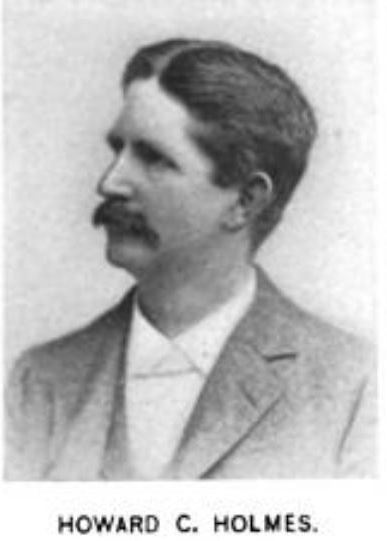
|
From the 1890 Langley's San Francisco Directory at
San Francisco Genealogy, page 654:
Holmes Howard C., civil engineer, r. 3019 Sacramento |
From the Sausalito News / Saturday, November 5, 1921. Page 2.
FAMOUS S. F. ENGINEER ENDS USEFUL CAREERHoward Carleton Holmes, Builder of Ferry Building and Cable LinesSan Francisco. -- Howard Carleton Holmes, civil and consulting engineer of national reputation, builder of the Ferry Building and most of the early cable railways of San Krancisco, died at 5 p. m. October 30, at his home, 2584 Filbert street, after an illness of several weeks. He is survived by his widow, Mrs. Josephine Bauer Holmes. Holmes was stricken at his desk six weeks ago. He was removed to his home, where his condition for a time showed marked improvement. During the past week he had been gradually sinking. He was 67 years old. Besides constructing the Ferry Building, Holmes is responsible for the development of Lake Chabot, and a principal source of water supply; the Alameda mole, the Key System mole, a greater part of the old Oakland, Alameda and Piedmont railroad and the yacht harbor and freight and passenger terminals at the Panama Pacific International Exposition and the Hunter's Point drydocks. Holmes' actual accomplishments extend the length of the Pacific Coast, while his reputation is known to engineers in all parts of the United States. He is the former consulting engineer of the Massachusetts Harbor and Land Commission, the Esquimault Shipbuilding and Dry Dock Company in British Columbia, the port of Portland Dock Commission, the Bethlehem Shipbuilding Company, the Western Paciflc Railroad and most of the larger corporations having terminal facilitiis in San Francisco harbor. Since the age of 17 Holmes had been identified with engineering. He was born June 10, 1854, at Nantucket, Mass., and when five years old came with his parents to San Francisco. His father, C. Holmes, was prominent in the early history of San Francisco as a miner and then as a building contractor. After receiving his education in the public schools of this city, Holmes started out as a surveyor and became identified with a number of leading engineers. He was only 19 years old when he made all the contour surveys necessary for the development of Lake Chabot. At twenty-one Holmes passed an examination for appointment as United States Deputy Surveyor. Soon afterward he became assistant engineer of the State Board of Harbor Commissioners, leaving this position to design and build the Alameda mole and depot for the South Pacific Coast Railways Company. Holmes directed his attention to street railway construction, when, in 1887-88 he built the Powell street cable railway, then known as the Ferries and Cliff House Railroad. During the next few years he built the cable railroads at Portland, Spokane and the Madison street railway at Seattle. Returning to San Francisco, he constructed the Sacramento street branch of the Powell street road, the lower end of the California street cable railroad and extended the Union street cable railroad from Fillmore street to the Presidio. Later he secured the contract for the electric street railway at Stockton. Beoming chief engineer of the Harbor Board in 1892, Holmes built the water terminals where all the railroads running into San Francisco, with the exception of the Southern Pacific, and even in the latter's slips, were installed the freight and passenger hoists invented by him. One of his innovations was a torpedo-proof pile for wharves, concrete over a core of wooden piles, which is now in general use all along the Pacific Coast. Resigning in 1901 from his position with the harbor board, Holmes became chief engineer for the San Francisco Dry Dock Company, at that time the largest graving dock on the Pacific Coast. Later he prepared plans for another dock at Hunter's Point, one of the world's biggest, and one that will care for the greatest ocean liners and battleships. He was chief engineer of the company at the time of his death. In the East, as well as the West, Holmes was considered an authority in his line. In 1904 he was commissioned by the Boston Harbor and Land Board to report on the respective merits of graving and floating docks. He also planned the Canadian Government's dry dock at Victoria. He was prominent in the club life of the city, having been a member of the Pacific Union Club, Bohemian Club. San Francisco Golf and Country Club, Engineers' Club. besides American Society of Civil Engineers, the Academy of Sciences, Occidental Lodge No. 22 of the Masonic Order, and the San Francisco Chamber of Commerce. |
Hello Central, Give Me Howard HolmesHere are the listings for Howard C Holmes from the February, 1903 Pacific States Telephone and Telegraph Company San Francisco phone directory: Main 1868. Holmes, Howard C., Chief Engnr. S.F. Dry Dock Co., Ferry Bldg.
Dedicated volunteers at San Francisco Genealogy typed in every page of the book. |
Go to top of page.
Holmes, Walton H
Walton H Holmes and his brother Conway F Holmes founded the Grand Avenue Railway of Kansas City and wound up as major stockholders in the merged Metropolitan Street Railway.
|
From the February, 1902 Successful American, page 93-94.
PRESIDENT METROPOLITAN STREET RAILWAY, KANSAS CITY, MO.
WALTON H. HOLMES, the second child of Nehemiah and Mary Holmes, was born in 1861, at Independence, Missouri. He was educated in the Kansas City High School and the Christian Brothers' College, at St. Louis, and devoted his vacations to work in the street railway office and among the workmen on the road. When sixteen years of age he engaged in business as a contractor and builder, employing a crew of forty men, quarrying and breaking stone, continuing in this business for ten years. When seventeen years of age he was made Vice-President of the Kansas City & Westport Horse Railway Company, and would have been President had not the law excluded one of his years from such position. Practically the Manager of the road, his selection was no empty honor, but was due to his knowledge of the duties devolving upon him and his capability for their proper discharge. Upon attaining his majority he was elected President of the Company, and from that time has been a leader in every successive movement for the improvement and extension of rapid transit. In 1886 he was the second to introduce the cable system, to the displacement of animal power, and the first in the United States to introduce the overhead trolley electric system, the newly equipped lines having been the Kansas City & Westport, the Fifteenth Street and Walnut Street, followed by the Mellier Place and Independence lines. He was chiefly instrumental in effecting the consolidation of the Grand Avenue Cable Company and the Kansas City Cable Company under his own management, in 1894. This change demonstrated the advisability of further consolidation in the interest of economy, and chiefly through his effort these properties and others were merged in the Metropolitan Street Railway Company, of which Walton H. Holmes became Vice-President and General Manager, and Conway F. Holmes became General Superintendent. While these important results were effected mainly through the planning of Walton H. Holmes, his brother, Conway F. Holmes, was his chief counselor and assistant at every step, and the two were as one in both purpose and agreement as to means. With perfect mastery of every detail of the great business in his charge, the conduct of President Holmes in management is easy and unassuming, with no indication of self-importance, or that his duties involve unusual labor or responsibility. Yet he has control of property valued at $18,000,000, had directed the expenditure of $1,800,000 for improvements in a single year, and has in employment 2,500 men, with an annual pay-roll of about $1,000,000. While his attention has been chiefly devoted to these important interests, of which he is the active head, he has ever rendered aid in behalf of all enterprises conducive to the development and improvement of Kansas City. It was chiefly through his efforts that Mr. Fleming, of London, England, holding large interests in the Atchison, Topeka & Santa Fe Railway and other industrial enterprises, was induced to invest considerable capital in the city. He has aided in the establishment of parks and boulevards, in the building and rebuilding of Convention Hall, and in all the various purposes of the Commercial Club, in which he is an active member. In October. 1900, at its convention in Kansas City, Walton H. Holmes was elected President of the American Street Railway Association. His personal traits are those of the well-bred gentleman, who derives from genteel society that relief from business cares which conduces to mental equipoise and physical well-being, and who contributes the best of his own attractive personality to the circles in which he moves. Mr. Holmes was married, in 1884, to Miss Fleecie Philips, daughter of Dr. W. C. Philips, of Austin. Texas, one of the most prominent surgeons in that State, who performed duty in the Federal Army during the Civil War. She is also related to Judge J. F. Philips, of the United States circuit bench. A son born to this marriage, Walton Holmes, Jr., is being carefully educated, and during vacations is engaged in the office of the engineer of the Metropolitan Street Railway Company. |

Go to top of page.
Hovey, Asa
Engineer Asa Hovey worked with Henry Casebolt to design the Sutter Street Railway. He created the first side grip, which became the most common type of grip in the industry.
C B Holmes hired Hovey to design the first US line outside of San Francisco, the Chicago City Railway.
From the May, 1895 Street Railway Journal, page 315.
Among the pioneers in cable railway construction, Asa E. Hovey claims a prominent place, having been interested in devising a grip as early as 1852, and afterwards in 1873 patented a grip which was used on the Sutter Street Road in San Francisco, which was cabled under his direction in 1874. Mr. Hovey was born at Waterford, Vt., in 1830, and when about twenty years of age, became a traveling salesman for the Fairbanks Scale Manufacturing Company, whose works were located at St. Johnsbury, Vt. In the latter part of the fifties he moved to San Francisco, and became foreman in the works of Casebolt & Van Gulpin. Under his supervision the first horse cars that were run on Market Street, in San Francisco, were built. In 1865 he returned East, but went back to California in 1868. In 1871 he became chief engineer of the Sutter Street Railway, which was then a horse line, and while the Clay Street cable road was building he made a model of a modified system and submitted it to the directors of the Sutter Street line, and at this time patented his cable grip. After the California Street line was cabled Mr. Hovey assisted in starting the line, suggesting some changes in the mechanism. He returned to the Sutter Street line and gave considerable attention to the development of his patents. Including the switch and grip. Under his supervision in 1880 the Sutter Street line was reconstructed with a wooden conduit about the same as that employed in the first construction. In 1880 C. B. Holmes, of Chicago, visited San Francisco and engaged Mr. Hovey to supervise the cable construction of the Chicago City Company. On completing the first section of the cable railway on State Street to 39th Street, the company paid him the stipulated price and made him a present of $1,000 in token of its appreciation of his ability. Mr. Hovey continued as chief engineer of the Chicago City Railway Company until 1889, when he left to go to Grand Rapids, Mich., for the purpose of overhauling the single track cable line then in operation in the city, and for devising plans for an extensive cable system. Here he remained about two months, but the scheme never materialized, and he returned to Chicago. Since 1889 he has not been actively engaged in railway work, and is living very comfortably with his wife and daughter in his home at 447 37th Street, Chicago. Mr. Hovey is a gentleman of the old school, and blunt but genial in his disposition, but the various cable railways which he has designed, and which are still in successful operation, are living monuments to his engineering ability. |

Go to top of page.
Kebby, HM
From the May, 1895 Street Railway Journal, page 315.
Mr. Kebby's first experience in cable railway practice was in 1883 on the Market Street system of San Francisco. From this city he went to Los Angeles, where he was engineer and superintendent of probably the first single track cable railway ever built. From Los Angeles Mr. Kebby moved in 1887 to St. Louis, where he was assistant engineer to A. W. Wright, on the Citizens' & Olive Street Line. In the following year he designed the plans for the East 7th Street line and the Selby Avenue power house of the St. Paul City Railway Company, of St. Paul, Minn. In 1889 Mr. Kebby returned to St. Louis, and as engineer for Wright & Meysenberg built the People's Railway on 4th Street and Chouteau Avenue. In the following year, as engineer for the firm mentioned, he drew up the plans for the Broadway line of St. Louis, including the power houses, and in 1891 and 1892 was chief assistant engineer to A. W. Wright on the Blue Island Avenue and Halstead Street cable lines of the West Chicago Street Railway Company. Mr. Kebby has been connected with a number of other engineering enterprises, and is not chief engineer of the American Railway Construction Copmpany, successors to Wright and Meysenberg. |

Go to top of page.
Kincaid, Joseph
Engineer Joseph Kincaid was born in Dublin on 12-November-1834. He graduated from Trinity College in 1857. He became involved in tramway construction and was a pioneer in mechanical traction: steam, cable, then electric. He was involved in the first cable railway in Europe, London's Highgate Hill Cable Tramway. With Edward Pritchard he designed and built the cable line of the Birmingham Central Tramways Company. Kincaid died in London on 20-August-1907.
Go to top of page.
Klussmann, Friedel

|
Mrs Friedel Klussmann, the Cable Car Lady. (Source: San Francisco Public Library Digital Archive, San Francisco Historical Photograph Collection) |
Friedel Klussmann, the Cable Car Lady, led the campaign that saved the San Francisco cable cars in the late 1940's.
In 1947, San Francisco Mayor Roger Lapham announced plans to scrap all remaining cable car lines in San Francisco, finishing the work that had started in 1942 when the Sacramento/Clay and Castro Street lines had been replaced by busses.
Mrs Friedel Klussmann, a prominent member of San Francisco society, read about the plan and began plotting a revolution at a joint meeting of the California Spring Blossom and Wildflowers Association and the San Francisco Federation of the Arts. She formed the Citizens Committee to Save the Cable Cars, which collected 50,000 signatures to put San Francisco Proposition 10 on the November ballot. This grass-roots movement sought facts to counter the bureaucrats' arguments and organized the citizens of the city to fight for a piece of their heritage. The proposition to save the cable cars won 77% of the vote and saved the cable cars, but Mrs Klussmann's committee rose again whenever cable cars were threatened by cost-cutting, soulless bureaucrats.
Lucius Beebe said Mrs Klussmann was designated to wield terror and authority once possessed by the Vigilance Committee of 1851.
Mrs Klussmann died at the age of 90 in 1986 and the cable cars wore black.
Mrs Klussmann also founded San Francisco Beautiful in 1947.
In 1971, Mrs Klussmann led the fight to pass San Francisco Proposition Q, which froze minimum cable car service in the city at the levels of 01-Jul-1971.

|
Mayor Joe Alioto presented Mrs Friedel Klussmann with an engraved silver tray from the Cable Car Centennial Committee for her long time service championing the "Save the Cable Cars" movement. (Source: San Francisco Examiner, 1973-08-02, Page 14). |
On 04-Mar-1997, the 50th anniversary of the Committee's initial storming of City Hall, the Friends of the Cable Car Museum dedicated a mural to Mrs Klussmann at the cable car barn.

|
On 01-Dec-1997, the city dedicated the turntable at the outer terminal of the Powell/Hyde line to Mrs Klussmann. On 26-October-2022, the city rededicated the turntable.

|
A quote from cable car savior Mrs Friedel Klussmann. (Source: White Plains Journal News, 1973-08-13, Page 16). |
Read "The Cable Car Lady and the Mayor", a good article by Walter Rice and Val Lupiz about Mrs Klussman's battles.
Go to top of page.
Knight, William B
From the May, 1895 Street Railway Journal, page 313-314.
The late W. B. Knight, of the firm of Knight & Bontecou extensive cable railway builders, was a native of New York City, where he was born in 1848. Mr. Knight studied civil engineering at the Rensselaer Institute, Troy, N. Y., and commenced the practice of his profession in 1868. He became later connected with a number of steam railway companies and the public works departments of different cities, and was at one time City Surveyor of New York. He was also for three years City Engineer of Kansas City. In 1879, the engineering firm of Knight & Bontecou was established in Kansas City, and while a member of this firm Mr. Knight assisted in the design and construction of three or four cable railways in that city. He died December 6, 1890, from injuries received in a railway collision. His experience as an engineer covered a wide range and he achieved a national reputation. |
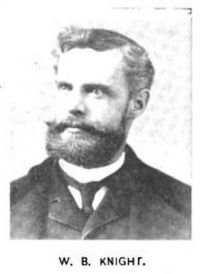
Go to top of page.
Lacey, Joe

|
Joe Lacey stands by Cal Cable car 50 at California and Drumm about 1971. Joe was a frequent contributor to this site. Joe Lacey collection. All rights reserved. October, 2006 Picture of the Month. |
Joe Lacey was born in San Francisco in 1943. He always called himself a "shirtail cousin" of Bob Murphy. Joe's father was Muni Inspector Al Lacey. Joe was a Muni operator for many years and a conductor in the Cable Car Division. Joe was eventually an inspector, like his father.
During his career, Joe collected a lot of Muni ephemera which otherwise would no longer exist. He also kept a detailed log of
his work. He made this comment in a 31-August-2014 email:
"I was taught in the first month of my MUNI career to keep track of
the hours, run, car, gripman worked with, unusual occurances.
"The hours worked was in dispute on many occasions. The book saved my bacon on several occasions I was called to the Division Supt office to answer citizens or Inspector's report of some wrong doing. With the book I could refute the charge by noting, I didn't work that day, I had a different car, they had wrong cap number, had different run number. When they researched my input sure enough it wasn't me. I encourage all operators to keep a book to keep 'the Man' honest."
Joe was very generous about sharing things with this website. Every December I remind people to visit his article Christmas on the Cables. He also wrote Making Movies and Television Shows With Cable Cars. On the How Do Cable Cars Work? page, he provided information about bell signals. He gave me a flier for the 1970 Annual Cable Car Bell Ringing Contest. Joe provided two clippings of Barbara Davies Walsh, Miss Cable Car 1973. Joe came up with a variety of emphemera about the save the cable cars movement, elections and the centennial. Joe reminded me to add Alfred Hitchcock's The Birds to my Motion Pictures Which Feature Cable Cars page. He provided photos of the new uniforms designed by Bill Blass in 1971. A photo of Joe in the uniform was the October, 2006 Picture of the Month. He provided more things to this site than I can list and I will always be grateful that he was willing to share.
Joe Lacey had a great sense of humor.
Joe Lacey died in Crescent City on 11-October-2017. I never met him in person, but I and a lot of other people will miss him.
Go to top of page.
Lane, Henry M
Henry M Lane, a graduate of the Massachusetts Institute of Technology, designed and built several cable car lines and formed a company to compete with the patent trust. A native of Cincinnati, he revised that city's Mount Adams & Eden Park Inclined Railway, a funicular, to carry horse cars. Later, he designed and built the company's cable car line on Gilbert Avenue.
From the May, 1895 Street Railway Journal, page 313-314.
H. M. Lane was born in Cincinnati, O., in 1854, and is a son of Col. P. P. Lane, who founded the Lane & Bodley Company, in 1851. He attended Cincinnati public schools, and after a special course at the Massachusetts Institute of Technology, 1873 and 1874, served five years as a draughtsman in charge of Lane & Bodley's draughting room and pattern shop. In 1875, he designed the engines and winding machinery for the Bellevue inclined plane, Cincinnati, O., and in 1879-80 designed and superintended the erection of the machinery for the Highland House inclined plane of the same place. In the Summer of 1884, he constructed an experimental line on Walnut Hills, Cincinnati, of the Johnson double or ladder cable and sprocket wheel system of cable railways. He was then engaged by the Mt. Adams & Eden Park Inclined Railway Company to equip its Gilbert Avenue line, consisting of one and a half miles double track, which was built in 1885. A peculiar feature of this road was that the cable was used only on the incline and that for the rest of the distance horses were employed. The grip was not connected permanently to the car, but remained in the slot, the coupling and uncoupling being automatic. The change from cable to horse and vice versa has been made without bringing the car to a full stop. In 1886, Mr. Lane extended both ends and completed this line, and in 1887 he designed and built the Vine Street cable system of the Cincinnati Street Railway Company. During the same year he examined and reported upon the St. Louis Cable & Western Railway and examined and reported upon the site and plans for Fourth and Selby Avenues (St. Paul) cable railway. In 1888, he was engaged as consulting engineer by the West End Street Railway Company, Boston, while the plans for the proposed cable line in that city were being prepared. In 1888, he examined the cable railways in Los Angeles and San Francisco, and prepared plans for and completed about twelve miles for the Denver Tramway Company. In the latter case a bonus of $204,000 was to be paid the company by the city, conditional upon the City Engineer of Denver or the State Engineer of Colorado, certifying to the completion of the road in good running order not later than December 31, 1888. The entire line, buildings, machinery and cars were completed and put in operation between July 4 and December 18, of the same year. In the latter month, to secure possession of Lawrence Street, he built four blocks of double cable railway track between seven o'clock in the evening and midnight of the same day, with 900 men whom he had secretly secured, although at seven o'clock there was no man in sight nor a pound of material on the street. In 1889, he designed and built the only cable railway in New England, that at Providence R. I., and an additional line for the Denver Tramway Company. On January 1, 1890, he succeeded his father as president of the Lane & Bodley Company, which office he now holds. Mr. Lane was the first to employ cotton rope drives of any magnitude in cable work, and the first to employ them to any extent in this country east of the Rocky Mountains. His successful demonstration of their value for cable stations was made on the Denver Tramway, where the rope wheel was twenty-six feet eight inches diameter by ten feet two and a half inch face, and was turned for forty-six two inch cotton ropes. |
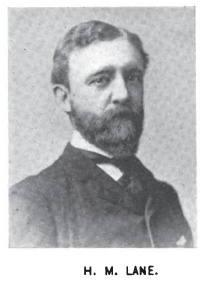
Go to top of page.
Lapham, Roger

|
Mayor Roger Lapham, the man who tried to get rid of the cable cars. Detail of a larger photo, enhanced by Joe Thompson. (Source: San Francisco Public Library, San Francisco Historical Photograph Collection, AAA-5771). |
Roger Dearborn Lapham was born on in 1883 in New York City. He served as president of the American Hawaiian Steamship Company, as a member of the National Defense Mediation Board, and headed government missions to China and Greece.
Lapham was elected Mayor of San Francisco in 1943 on a platform that promised to clean up corruption in government and run the city on business principles. He did many good things, but is primarily remembered for one unfortunate act, trying to get rid of the cable cars.
In his State of the City address in January, 1947, Lapham proposed replacing them with buses. The reaction, led by Mrs Friedel Klussmann, was immediate and violent. Lapham's plan was defeated by the voters in November.
Lapham died on 16 April 1966.
|
During the Save the Cable Cars war, Lapham was the subject of a crossword puzzle. Especially note 49 across. (Source: Grand Rapids Eagle, 07-May-1947). |
Click here to see the answers.
|
The July 15, 1946 edition of Time featured
San Francisco Mayor Roger Lapham
on its cover. The article inside said "On July 16 the city will
go to the polls and decide whether to recall Mayor Roger Dearborn
Lapham. Some San Franciscans wanted to oust him because his
administration had put through a 3˘ fare rise on the city's
rattletrap trolley lines."
|
|

|
The February 24, 1947 edition of Life described
the early stages of the fight to save the cable cars from
Mayor Roger Lapham. The article said "Civic-minded San Franciscans
and sentimentalists all over the U.S. denounced the move, ridiculed
Lapham's claim that the cars were losing $200,000 a year, wondered how
buses, even if they could climb the hills, would lose any less."
|
|

Go to top of page.
Lawless, Edward J
From the May, 1895 Street Railway Journal, page 315.
E. J. Lawless commenced his street railway career in 1877, on the Sutter Street cable line in San Francisco, Cal., as foreman of a construction gang. He acquitted himself so creditably at that work that he was shortly afterward appointed assistant secretary. This position he held lor two years when, on a reorganization of the company, he was appointed assistant superintendent, holding that position until 1884. It was during this period, when extensions and new power stations were built, that Mr. Lawless acquired a thorough knowledge of the construction and operation of cable railways in all its branches. In 1885. Mr. Lawless was appointed superintendent of the Kansas City Cable Railway Company. The success of this road was so great that other companies rushed into the field and (he city was gridironed with cable lines. One of the first to follow was the Metropolitan Cable Railway, which engaged Mr. Lawless's services, to act in conjunction with its constructing engineers, and also take charge of the operation of its entire system. In 1888, Mr. Lawless retired from street railways and embarked in the manufacture of cement, first in Fort Scott, Kan., and later in Salt Lake City, Utah. In 1891, however, he was induced to return to the street railway field, and was appointed manager of the Paterson (N. J.) Railway Company. It was here that Mr. Lawless displayed his abilities as a diplomat and general of many resources, when changing the horse car system to electricity, in spite of the fierce opposition of a large number of the property holders. On the completion and perfecting of its system Mr. Lawless resigned his position, and now acts as Eastern agent for the American Car Company, of St. Louis, Mo. During his railroad career Mr. Lawless has been a regular attendant at the Street Railway Conventions, and has always taken a prominent part in the discussion of subjects brought before the meeting, believing that the views and experiences of the numerous railroads throughout the country under varied conditions should be fully ventilated for the benefit of the association. |
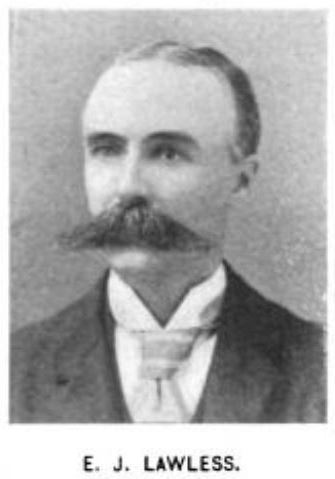
Go to top of page.
McCann, Raymond M
Ray McCann was born in New York, but moved to San Francisco in 1969. He loved the city and served as one of its ambassadors when he went to work as a cable car gripman in 1979. During the Great Reconstruction in 1982-1984, he wrote Muni's first manual on operating cable cars.
On 12-Aug-1984, McCann and his conductor, Charles Gertsbacher, were taking a full load of passengers up the Hyde Street hill when a suicidal driver drove down the wrong side of the street at high speed and hit the cable car head-on. McCann was knocked off his feet and the car rolled backwards down the hill. Gertsbacher fought through the crowd of passengers and found McCann dazed and bleeding on the floor. Together, they pulled the emergency brake and stopped the car. The driver died, but many others would have, too, had it not been for the heroic action of the gripman and conductor. They both received medals from the US Department of Transportation.
Mrs Kathleen McCann reports that "...with stitches in his head and still bandaged he went to the barn the day after the accident and gripped one of the cars for a short period of time because he felt that if he didn't face it right away that fear would somehow mar the deep affection he had for working on the Cable Cars".
McCann's many charities included a yearly luncheon for senior citizens at Old Saint Mary's Church.
Ray McCann died on 29-May-1997 of melanoma; he was only 47.
Go to top of page.
Lowry, Thomas

|
Thomas Lowry was an attorney and entrepreneur, who came to Minneapolis from Illinois in 1867. The Panic of 1873, which was really a major depression, did great damage to the local economy. Lowry took an interest in the street railway in Minneapolis, which was struggling to survive. He was involved in the street railway industry across the river in Saint Paul. He founded the Saint Paul City Railway, which opened a cable railway on Selby Hill in 1888. This line opened up access to real estate that Lowery owned and developed. Eventually, he saw all transit lines in the two cities converted from horse or cable to electric operation and incorportated into the Twin Cities Rapid Transit.
Thomas Lowry died in Minneapolis on 04-February-1909.

|
This memorial to Tom Lowry still stands in Minneapolis (Source: The Electric Railway Journal, 02-April-1921). |
Go to top of page.
Miller, DJ
DJ Miller's duplicate cable system was also used by the Kansas City Cable Railway.
From the May, 1895 Street Railway Journal, page 313.
D. J. Miller, inventor of the "Duplicate" or American system of cable railways, was born in Truxton, Cortland County, N. Y., Oct. 21, 1852. He attended the village school till about fourteen years of age, when he was put to service with the Remington Arms Company, at Ilion, N. Y. He was afterwards employed as a tool maker by Pratt & Whitney, of Hartford, Conn. In 1879 he removed to Chicago, and was for a time connected with the Union Brass Manufacturing Company. Soon after the construction of the first cable road in Chicago was begun Mr. Miller entered the employ of the Chicago City Railway Company as draughtsman, and under the direction of Mr. Hovey made many of the drawings and plans for the South Side cable road. In 1883 he came to New York and built the Tenth Avenue cable road, putting in the duplicate system. He afterwards became chief engineer in charge of both the Tenth Avenue and 125th Street cable roads. In July, 1889, he returned to Chicago, and entered the employ of the North Chicago Street Railway Company. He died in Chicago Sept. 27, 1889. Mr. Miller invented and patented many improvements in the construction of cable railways. |
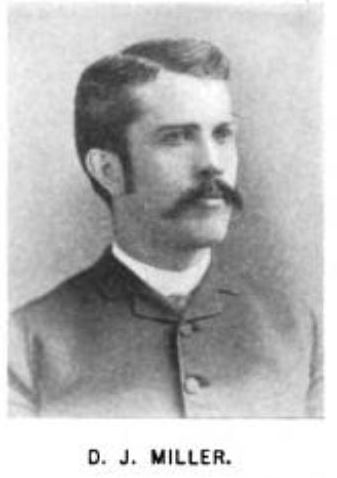
Go to top of page.
McCulloch, Robert

|
Captain Robert McCulloch was a Civil War veteran and a street railway manager, primarily in Saint Louis, Missouri. He died on 29-September-1914.
|
From the October, 1897 Street Railway Journal, page 654.
Robert McCulloch was born Sept. 15, 1841, of Virginia parents, who were of Scotch descent. His ancestors settled in Virginia in the colonial days, the male members on both sides having been soldiers of the Revolution. He was left an orphan at an early age, entered the Virginia Military Institute, at Lexington, Va., in 1859, and remained there until the beginning of the war. When Virginia seceded, all the cadets at the Institute were ordered to Richmond to drill the recruits, and Cadet McCulloch served as drillmaster until Apr. 19, 1861, when he entered the Confederate service. He took part in all the great battles of the Army of Northern Virginia and was wounded five times, once at the first battle of Manassas, once at the second battle of Manassas, once at the battle of Frazier's Farm, and twice at the battle of Gettysburg. At the last named battle, his regiment took part in the celebrated charge of Pickett's Division, and every man in his company was either killed or wounded. He was adjutant of the Eighteenth Virginia regiment and afterwards captain of Company B of this regiment After the battle of Gettysburg, he was sent to the military hospital in Baltimore, and afterwards to the military prison on Johnson's Island in Lake Erie, where he remained until the close of the war. In 1869, he went to Missouri and resided for four years in St. Louis County near Florissant. In 1874, he accepted the position of secretary of the Bellefontaine Railway Company, and retained this position until 1893. In 1889, he was made vice-president and general manager of the Citizens' Railway Company, the Cass Avenue & Fair Grounds Railway Company and St. Louis Railroad Company, which had just been bought by a syndicate of Chicago capitalists. In 1889, Captain McCulloch was elected one of the vice - presidents of the American Street Railway Association, and in 1896 he was elected president of the association. He has always had the interests of this association at heart, and has been untiring in his efforts, especially at the St. Louis convention in 1896, to broaden the field of the association's usefulness. Captain McCulloch is recognized as one of the most able and progressive street railway managers in the country. Under his management the Cass Avenue & Fair Grounds Railway lines have been changed from horse to electric, the Broadway line of the St. Louis Railroad Company, from horse to cable, and the Baden line of the St. Louis Railroad Company, from horse to electric; the Southwestern electric line has been projected and built; the Easton Avenue line of the Citizens' Railway Company and the Grand Avenue line of the same company have been changed from cable to electric, and the Marcus Avenue line of the Citizens' Railway Company, from horse to electric. It is interesting to note that he was the first street railway manager in America to undertake and, in fact, insist upon the installation and operation of a direct coupled generator, the first to use the cast welded joint, the first to use 60 ft. rails and the first to use a water car propelled by its own motors. Broad-minded and courageous always, he has never hesitated to take the responsibility of putting his well digested convictions into practice. |
Go to top of page.
McNulty, George W
From the May, 1895 Street Railway Journal, page 316.
Geo. W. McNulty was born in New York City, September 7, 1851, and is descended on both sides of his house from old Revolutionary stock. He was educated at the University of Virginia, and after being graduated from this institution, returned to New York in 1868, and entered the office of James Owens. While with Mr. Owens he was chiefly engaged on the surveys made for the purpose of improving the roads of Essex County, N. J. The preparations for building the Brooklyn Bridge had just commenced, and Mr. McNulty, looking for a broader sphere of action, tendered his services. He was told no additional help was needed. Not to be defeated in his desire, he offered to serve without compensation, and Col. W. A. Roebllng, the chief engineer, impressed by his earnestness, set him to work. In 1884, after fourteen and a half years of continued and most satisfactory service, he severed his connection with the Bridge staff, and in connection with M. L. L. Buck established an office at 45 Broadway to engage in private practice. After being connected as engineer with various enterprises, including the rebuilding of the Niagara Falls and Clifton suspension bridges, he was appointed chief engineer of the Broadway cable system. His work in connection with this system is familiar to our readers, through published accounts in the Street Railway Journal, and it was due to his genius, to a large extent, that the great engineering difficulties encountered in building this system were overcome. Mr. McNulty is now chief engineer of the Wire Conduit Company. |
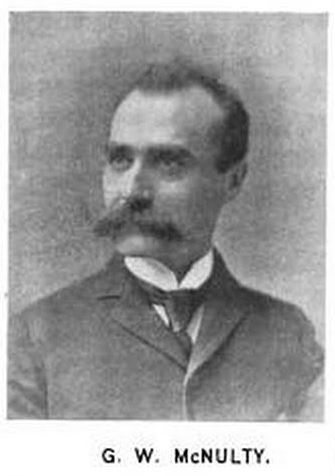
Go to top of page.
Moffitt, James
James Moffitt was one of Andrew Smith Hallidie's partners in the Clay Street Hill Railroad. Moffitt was born in Ireland in 1827. He founded a wholesale paper company, Blake, Moffitt & Towne. Moffitt died on 27-October-1906.
Go to top of page.
Morton, Reuben
Reuben Morton, who had a successful draying business, was one of the founders of the Geary Street Park and Ocean Railway
|
from The Early Days and Men of California, William F. Swasey 1891. Was born in Graham, Cumberland County, in the State of Maine, January 9, 1819. He was descended from a long line of most honorable ancestry. The name is inscribed upon the roll of honor among the Revolutionary heroes and patriots that gave us our independence. His grandfather, David Morton, and seven other Mortons, all related, served in a Massachusetts regiment at Long Island under General Sullivan. He was present at the taking of Long Island by the British, and also at the battle of White Plains. His father, David Morton, served in the war of 1812, and was one of the last survivors of that memorable contest . Reuben Morton was essentially a self-educated man, but he inherited a sanguine disposition and an indomitable will. Being a member of a growing and increasing family, he early determined to relieve his parents of the burden of his support, and become the architect of his own future. In obedience to this dictate he left his home at the early age of thirteen, and obtained employment in a cloth factory. He continued in that occupation until he was twenty-one years of age, when he sought and obtained a situation in the Lowell factories. In 1842 he entered into business in Boston, in which he continued until 1849, when the news of the discovery of gold in California reached him; and, animated by the same spirit of independence that characterized his boyhood days, he immediately determined to be among the first to seek its golden shores. In accordance with this determination, on the 10th of February, 1849, he embarked on board the bark Lanark, bound for San Francisco via Cape Horn, where, after undergoing all the deprivations and discomforts incident to such a voyage at that time, he arrived, on the 12th of September following. At the time of his arrival San Francisco was in a state of the wildest excitement. All business methods seemed to be lost sight of; tales of the fabulous wealth to be obtained in the mines by mere manual labor, were told upon every side; gold-dust was almost the sole circulating medium, and everybody had a plethora of it, carried loosely in their pockets in the shape of chispas, ranging all the way from a quarter to several ounces in weight; and every new arrival seemed to be agitated by but one idea, a feverish desire to reach the mines as soon as possible. Mr. Morton and four of his fellow-voyagers soon left for the mines, and went to Mokelumne Hill, where they located several mines. After remaining there until the summer of 1850, and meeting with but indifferent success, Mr. Morton returned to San Francisco and entered the employ of C. B. Gillespie as teamster. In a short time he commenced the draying business upon his own account, which, increasing rapidly and becoming very profitable, he took as partner his brother John, and established the firm of R. & J. Morton. The business steadily grew in magnitude, and generously rewarded its proprietors. But the wearisome and unceasing labor that it required overtaxed his strength and soon undermined his health; and in 1871 he sold his interest in the business to his brother, Sergeant S. Morton, and J. Ruggles, and went East seeking its restoration. He returned in a few months very much recuperated, and connected himself with the Central Street Railroad Company, and in July, 1871, was elected its president and superintendent, which position he held until his death. He also became one of the original promoters of the Geary Street Cable Railroad, which was constructed and operated under his supervision and superintendency. The success of these enterprises is due, in a very great measure, to the same untiring energy and executive ability that characterized his whole life. But the seeds of a fell disease had been implanted in his system, and finally developed virulent cancer of the stomach, which compelled him to cease all active business pursuits, and soon prostrated him upon a bed of sickness. For months he endured the most excruciating torments with heroic fortitude. About a month previous to his death, his system rallied slightly, and he was advised to seek a change of climate. He, accordingly, went to Chicago. But, despite the most eminent medical advice and most tender nursing, the disease culminated in his death on the 9th of July, 1882, at Chicago, where his obsequies took place. Two brothers survive him in San Francisco, John Morton, still carrying on the same business inaugurated by the two brothers in 1850, and Sergeant S. Morton, the popular ex-supervisor and capitalist. Mr. Morton left an ample estate, in the disposition of which he did not fail to remember most generously everyone of near kinship, with whom, without exception, his memory remains embalmed with the tenderest love and in vernal freshness. His death created a sad void in social and business life in San Francisco, where it was sincerely and generally deplored. |
|
An ad for Morton Draying from the 29-July-1900 San Francisco Call. |
Go to top of page.
Morrow, Robert F

|
Robert F Morrow led the group which purchased the Sutter Street Railway from Henry Casebolt. Morrow was born in what is now West Virginia on 31-December-1831. He came to California in 1852.
|
from The Collected Works of Ambrose Bierce. 1911.: Ambrose Bierce was not a fan of Robert F Morrow. Maurice Schmitt was one of Morrow's partners in the Sutter Street Railway. Dear man! although a stranger and a foe
|
Go to top of page.
Murphy, RT
RT (Bob) Murphy was a native of San Francisco who grew up in the Richmond District. He served in the Army and went to Vietnam. He worked for the San Francisco Municipal Railway, driving buses, operating streetcars and gripping cable cars for many years. He fought management for safety and worker's rights. He participated in a reform group which published a newsletter called Draggin the Line.
Murph emigrated to Australia when Richard Nixon was reelected in 1972. He operated trams, drove trucks, and wrote about the trucking industry. He didn't take crap from anyone.
Murph contributed much information to this website, including photos of Melbourne Tramways & Omnibus Company equipment and powerhouses, photos of a Sutter Street Railway trailer and a California Street Cable Railroad from Knott's Berry Farm which are now preserved at the Orange Empire Railway Museum, a 1972 ergonomic memo, "Proper Techniques and Body Positions for Cable Car Gripmen" and Instructions for Cable Car Operations, an undated Muni item. Our late friend Walter Rice wrote the Editor's Notes for both documents.
When time and health permitted, Murph was an active and valued member of the SFMuniHistory and TramsDownUnder Yahoo groups.
Bob Murphy died in Australia in December, 2014. I never met him in person, but I and a lot of other people will miss him.
Go to top of page.
Naphtaly, Joseph
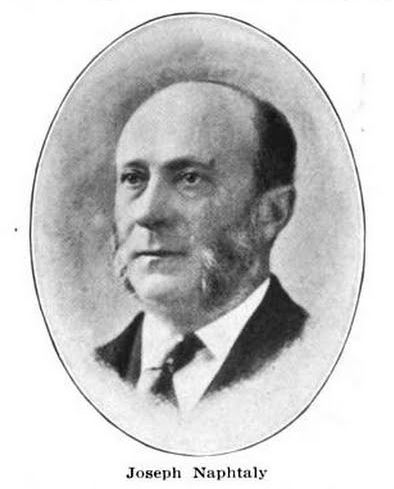
|
Joseph Naphtaly was a member of the group of investors led by Robert F Morrow which purchased the Sutter Street Railway from Henry Casebolt.
|
from Western Jewry: An Account of the Achievements of the Jews and Judaism in California, Including Eulogies and Biographies, The Jews in California, by Martin A. Meyer. 1916. THOUGH at this writing it is nearly six years since Joe Naphtaly went to his reward, neither his good deeds nor his genial personality have been forgotten. A lawyer of scholarly attainments, he held high rank among the legal fraternity of California and was in his time foremost among the Jewish practitioners hereabouts. Joseph Naphtaly was born in Prussia September 29, 1842. His early education was received in the Gymnasium of Berlin, and at the age of thirteen he came to San Francisco, where he attended the public schools. Later he entered Yale University, from which institution of learning Naphtaly graduated with the degree of LL. B. Returning to San Francisco, he entered the county clerk's office for a while, after which he entered the practice of his profession. The law firm of Naphtaly, Freidenrich & Ackerman, comprising Joseph Naphtaly, David Freidenrich and Charles L. Ackerman, was soon organized and became in time one of the biggest and best known in the State. He was a lawyer par excellence and enjoyed a lucrative practice. That he shared his prosperity with those less favored by fortune is known to a host of people. He was generous almost to a fault and it was often suspected that his goodheartedness got the better of his judgment. Naphtaly was intensely Jewish. For many years a director of Temple Emanu-El, he rendered that institution distinguished service. His breadth of view and his desire for sane and rational progress in Judaism, as in all other things, kept him among the leaders in Jewish communal affairs. He was a director of the Pacific Hebrew Orphan Asylum and vice-president of the First Hebrew Benevolent Society. He was a Mason in high standing and was also affiliated with the I. O. B. B. and I. O. O. F. At one time he was a member of the State Assembly and served in 1869 as chairman of the judiciary committee. Joseph Naphtaly was married in 1869 to Miss Sarah Schmitt. Their children are Mrs. L. B. Feigenbaum and Samuel L. Naphtaly He died August 29, 1910. |
Go to top of page.
Nash, CT
From the May, 1895 Street Railway Journal, page 318.
C. T. Nash, at present superintendent of motive power and cable department for the West Chicago Street Railroad Company, began his cable railway experience with the Chicago City Railway Company, on January 1, 1882, when he took charge of the ropes of that company, the first cable line operated east of the Rocky Mountains. Great annoyance having been experienced by the frequent stranding of the ropes in this early experiment, caused by the slipping of the strands at the splice, Mr. Nash devised a new method of splicing known as the Nash or knot splice, which he patented and which is quite generally employed by cable railways. Mr. Nash remained about eight years with the Chicago City Railway Company, when he resigned to take charge of the ropes of the North and West Chicago Street Railway systems, but resigned after a service of six weeks and accepted a position with the John A. Roebling's Sons Company, rope manufacturers of Trenton, N. J. He was sent out by the company to collect statistical data pertaining to cable railways, and remained in its service for about three years, in which time he made several visits to all of the cable railway lines then operating in the United States, and made diagrams and reported upon the salient features of the system, having special reference to the character of the winding drums, pit and guide pulleys. Having finished this class of work, he returned to the employ of the West Chicago Street Railroad Company, and has since been connected with the company. Mr. Nash was born at Mt. Loffy in Pennsylvania, in 1846. Under Mr. Nash's supervision, the life of the ropes of the West Chicago Street Railroad system has been increased, on the main lines from 70 to 75 per cent. and on the tunnel section, 33 per cent. |
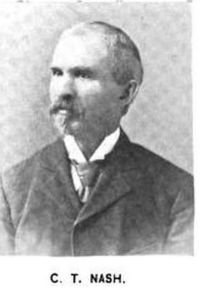
Go to top of page.
Olson, M
I'm looking for other references to this poor guy. His claims were probably exagerrated.
From the San Francisco Call / Friday, January 24, 1896. Page 2.
Inventor Olson Insane.CHICAGO, Ill., Jan. 23. -- M. Olson, who was master mechanic and inventor in the employ of the Chicago City Railway Company for a dozen years, was adjudged insane in court to-day. He invented the grip-car which is now in use on the cable systems as well as many other valuable street-railway equipments which be neglected to have patented. In 1893 he invented a car truck which is now in extensive use. He superintended the construction of the Metropolitan Street Railway of Kansas City, Mo. |
Go to top of page.
Orengo, Joe

|
(Source: Salem Statesman Journal, 30-July-1950, page 10 |
Joe Orengo was an Italian-American baseball player, coach and manager. He was born in San Francisco on 29-November-1914. He played for several teams in the PCL and the major leagues, including the Sacramento Solons and the New York Giants. He played all positions in the infield. Later he was general manager of the San Francisco Seals and director of the San Francisco Giants' speakers bureau. I remember him making announcements before games at Candlestick.
Why do I mention Joe Orengo in a website about cable cars?

|
Playing in the minor leagues, Joe Orengo made $100 a month. During the off-season, he worked as a gripman for the California Street Cable Railroad. "I worked 12 hours a day on the California Street line, and I got 50 cents an hour." Harry Jupiter was sports editor of the San Francisco Examiner forever. He came and talked at our high school. (Source: San Francisco Examiner, 23-May-1988, page 36) |
So Joe Orengo combines two of my great interests, cable cars and baseball. Joe Orengo died on 24-July-1988.

|
Joe Orengo hit a grand slam on 19-June-1937, leading Sacramento in a victory over the Seattle Indians. (Source: Salem Statesman Journal, 20-June-1937, page 7) |
Go to top of page.
Paine, William Henry
Colonel William Henry Paine, a veteran of the Union Army, was an important engineer in the cable railway industry. He designed the rapid transit cable railroad on the Brooklyn Bridge and created its unique roller grip.
From the May, 1895 Street Railway Journal, page 313.
The late Col. W. H. Paine, assistant engineer of the Brooklyn Bridge, was born at Chester, N. H., in 1828. He began the practice of civil engineering in Wisconsin, 1850, and two years later went overland to California, where he found opportunity for the exercise of his profession in mining, hydraulic and topographical engineering. It was largely at his suggestion that water was brought in sluices from different points to be utilized for hydraulic mining. At the opening of the war, he look a prominent part in raising several regiments, and performed most valuable services for the Union cause as assistant topographical engineer of the army of Northeast Virginia. He was later appointed captain of engineers, and assigned to duty on the staff of the major general of the army. At the close of the war, he made Brooklyn, N. Y., his home, and in 1867 and in 1868 was appointed chief engineer of the Flushing & Northern Railroad, of Flushing, L. I., and built that line. In 1869, he was appointed assistant engineer on the East River Bridge, and was engaged on that structure for eighteen years, assisting in all parts of the engineering work. He designed the system of cable traction in use on the Brooklyn Bridge, and was the inventor of the well known grip employed, bearing his name. He was also consulting engineer of the Tenth Avenue cable railway in New York, constructing engineer of the 125th Street cable railway, and consulting engineer of cable railways in Denver, Omaha, Kansas City and Cleveland, and designed and constructed the cable railway in the latter city. He died December 31, 1890. |

Go to top of page.
Payne, Carl

|
Ten-time grand champion Carl Payne gives an exhibition at the 2016 Cable Car Bell Ringing Contest. Defending champ Byron Cobb stands to the left. Photo by Joe Thompson. September, 2021 Picture of the Month. |
Carl Payne was the only 10-time winner of the Cable Car Bell Ringing Contest. He was also a transit operator, police officer, San Francisco ambassador and great all-around guy. Above we see him giving an exhibition performance at the 2016 contest. He was born in Pittsburgh, but settled in San Francisco after he served in the Marine Corps.
He went to work for Muni and stayed for 29 years. He spent 28 years working in the Cable Car Division. The only person who has come close to his record of ten Cable Car Bell Ringing Contest championships is Byron Cobb, who has won eight times. Payne travelled the world, appeared with symphony orchestras, and shared his joy for life with everyone.
While working on the cable cars, Payne became an expert at spotting pickpockets. When he left Muni, he applied to join the San Francisco Police Department. He passed the test, but was told that he was over the maximum age. He sued the department and eventually won. He spent 25 years with the police. After retiring from the SFPD, he became a Golden Gate Park ranger. He had to give that up when he started to have health issues.
The image above shows him giving an exhibition at the 2013 Cable Car Bell Ringing Contest. Four former champs gave an exhibition at the 2017 contest: Al Quintana (1982, 1986, 1990, 1994), Ken Lunardi (1997, 2002, 2006), Frank Ware (1999, 2004) and Carl Payne (1977, 1978, 1980, 1981, 1983, 1984, 1985, 1987, 1988, 1989).
Carl Payne died on 07-August-2021 after a long career of service to the people of San Francisco and our visitors.
Go to top of page.
Phenix, William
From the May, 1895 Street Railway Journal, page 317.
William Phenix began his cable railway career in 1881 with the Chicago City Railway Company, being superintendent of the street construction and street machinery of the entire cable system of this company under Asa Hovey, chief engineer. After the system was fully in operation, Mr. Phenix had full charge of the ropes and street machinery for a short time, when he resigned his position and superintended the construction of the Walnut Hills cable railway of Cincinnati, O., under Harry Lane, as chief engineer and designer of the system. He then removed to St. Louis and became superintendent of construction of the east half of the first cable railway built in that city, under William Noble, chief engineer. This road was built on the Boyer system, but the grip employed was invented by Mr. Phenix. Mr. Phenix afterwards built from his own patents a single track cable railway in Grand Rapids, Mich., this being the first single track cable line with turnouts then constructed. All the plans, including the machinery and power bouse, were designed by Mr. Phenix, who also superintended the setting up of the machinery. He then designed and built a similar line in Sioux City, Ia, having eight turnouts, a horse shoe loop and a crossover switch at one terminal. The road was built over uneven surface and contained many curves, a construction requiring great skill in manipulating the ropes around a single track curve. This was at the time one of the best constructed cable railways in the country from a mechanical standpoint, and, together with the power house design, indicated good engineering skill. Mr. Phenix has been connected with the building and engineering of steam plants for electric railways and built the power plant for the Citizens' Street Railway, Memphis, Tenn., and the power station of the North Side Street Railway of Ft. Worth, Tex. He is at present engaged as inspector of track construction by the New Orleans Traction Company. Mr. Phenix was born at Carthage, Maine, in 1831, and previous to his engaging in street railway work was an architect and builder. Under his supervision were constructed a number of large buildings in Chicago and elsewhere. |
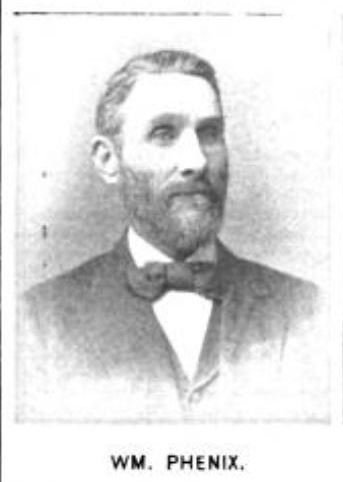
Go to top of page.
Potis Jr, Salvator
I suspect his name was really Salvador, but the newspapers used the Italian spelling.
From the May, 1895 Street Railway Journal, page 316.
Mr. Potis holds the position of mechanical engineer with the West Chicago Street Railway Company, and has been in the employ of this company virtually since 1889. He was assistant to A. D. Whitton, in designing the cable systems of the north and west sides, and himself designed the vaults and special work of the Clybourn Avenue on the north side, and changing machinery in the Clark Street power station. He also designed the cable turn table employed in this line, which is the largest and only cable turn table, we believe, employed east of Kansas City. More recently Mr. Potis designed and built the Desplaines Street power station of the Blue Island Avenue cable line, and planned the reconstruction of the Washington Street station, from which two cables are now operated over the loop. Mr. Potis planned and built the Blue Island Avenue and Van Buren Street power stations, and put in all the vaults. He also designed and superintended the construction of the track rack rail brake and the self-acting depression pulleys in the tunnel. The rack rail brake consists of a rack in the bed of the track, into which a pinion meshes, and by which the speed of the car is checked through the medium of friction clutches. Mr. Potis also designed and built the special work for the State Street loop, which was put in a year or two since. His more recent work with the company includes the design and construction of the California Avenue electric station of the Chicago Electric Transit Company, in which power was turned on five months after the ground was broken, the station containing 8,000 steam H. P. Mr. Potis has also designed and superintended the construction of the West Side Company's new station at Western Avenue and Washington Street, which is to have a capacity of 12,000 H. P. Mr. Potis was born in La Guayra, Venezuela, South America, in 1861, his father being a seaman. His early education was obtained at the Queen's Collegiate School on the Island of Trinidad, and also at Bolivar College on the same island. In 1880, Mr. Potis came to the States and located in Brooklyn, N. Y., being connected with the Continental Iron Works, and while thus employed, he studied mechanical drawing and engineering, at the Cooper Institute, in New York, for four years. From 1884 to 1886, he worked at the Hoff, Fontaine & Abbott Engine Works, in Philadelphia, which works were engaged in the building of engines, mining machinery and boilers, and during this time Mr. Potis studied at the Spring Garden Institute, Philadelphia. In 1886, he returned to South America, but came to Chicago in the latter part of the same year and engaged with Fraser & Chalmers in the manufacture of engines, until 1889, when he became connected with the United States Construction Company, as assistant to A. D. Whitton, this company being controlled by the same parties who control the North Chicago street railway system, and on the death of Mr. Whitton, succeeded as chief engineer on the roads controlled by Chas. T. Yerkes. Mr. Potis is a member of the American Society of Mechanical Engineers, and has attained a creditable reputation both in the cable and electric railway fields. Mr. Potis speaks three languages fluently, French, Spanish and English. |

|
From the May 5, 1900 Street Railway Journal, page 460.
Salvator Potis, a noted civil and mechanical engineer, was found dead in his apartments at the Technical Club, Chicago, April 17, with a bullet wound through his heart. It is thought he took his life while temporarily insane from the effects of an attack of the grip. He was about forty-two years old and the son of a general in one of the revolutionary armies of Venezuela, and was born at Caracas. Mr. Potis, when a boy, was sent to the United States to be educated. He was graduated from the technical school of the University of Pennsylvania. Then he enlisted as an engineer in the American Navy, and after serving the enlistment entered on the business side of his profession as a mechanical and civil engineer. He went to Chicago twelve years ago and became associated with the North Chicago and West Chicago Street Railroad Companies. He designed and built most of the power plants of both companies, completed the Van Buren Street tunnel and the Union loop power house. Mr, Potis left one son nine years old. |
|
From the May 15, 1900 Street Railway Review, page 294-295.
MR. SALVATOR POTIS was found dead in his room at the Technical Club, Chicago, on the afternoon of April 17th, he having committed suicide with a revolver. Mr. Potis was about 40 years of age, and a native of Caracas, Venezuela, from which country he was sent to the United States when a boy by his father, who was a general in one of the revolutionary armies. He graduated from the University of Pennsylvania, came to Chicago 15 years ago, and entered the service of the West and North Chicago Street Railroads, where he was soon promoted to the office of chief engineer. In that position he constructed the largest plants of both roads, the Van Buren St. tunnel under the Chicago River, and the large station of the Union Loop elevated. About two years ago he returned to his native country, but a few months since came back to Chicago, taking charge of the work of the Illinois Telegraph & Telephone Co., which is tunneling the business streets with immense conduits. About three years ago Mr. Potis suffered repeated bereavements, losing by death within six months both his parents, his wife and one child. Ever since that time he has been subject to periods of intense melancholia, and it was undoubtedly during one of these that he took his life. He leaves one child, a son, nine years of age, who is living with relatives in Venezuela. |
Go to top of page.
Pritchard, Edward
Engineer Edward Pritchard was born in Wrexham, Wales in September, 1838. He specialized in waterworks, sewerage, and tramways. With Joseph Kincaid, he designed and built the cable line of the Birmingham Central Tramways Company. Pritchard died on 11-May-1900.
Go to top of page.
Rice, Walter

|
| Muni General Manager Michael Burns, San Francisco Mayor Willie L Brown, Jr and Doctor Walter Rice on 10-Apr-2003, at the California Street Cable Railroad 125th Birthday Party at the cable car barn at Washington and Mason. Photo by Val Lupiz. All rights reserved. |
Walter Ellery Rice, whom I am proud to have called a friend, passed away on 12-December-2007.
He was what used to be called a man of parts. Walter, a native of San Francisco, was a PhD, Associate Dean and Professor Emeritus of Economics at Cal Poly San Luis Obispo, a historian who has written on many topics related to transit and railways, a die-hard fan of the San Francisco Giants, and a keeper of goats. This list covers only a small part of his accomplishments. He was former chairman of the Friends of the Cable Car Museum, and was currently a member of the board of the Western Railway Museum.
I first got to know Walter when he was setting up the website of the Friends and he wrote to me with some questions.
I remember him as a gentleman, a man of great vitality, a good guy who took an interest in people of all sorts, a family man, and a person who lived to share his great knowledge with others. Walter and his wife Laurie were kind hosts to the many visitors who turned up at their home, including me and my family.
I was honored that he made so many contributions to this website. I highly recommend his interview with Mrs Barbara Kahn Gardner, the daughter of Samuel Kahn, President of San Francisco's Market Street Railway, the chronology, his articles about the Manx Electric Railway, the Isle of Man Railway, and the Great Orme Tramway, and the many pieces of information and images that Walter allowed me to use.
I also recommend his many books and magazine articles. Here are a few books that come to mind:
- Of Cables and Grips: The Cable Cars of San Francisco by Walter Rice and Robert Callwell. Read the text of the second edition
- San Francisco's Powell Street Cable Cars by Walter Rice and Emiliano Echeverria
- San Francisco's Interurban to San Mateo by Walter Vielbaum, Robert Townley, Walter Rice, and Emiliano Echeverria
- The Key System: San Francisco and the Eastshore Empire (Images of Rail) by Walter Rice and Emiliano Echeverria
- Rails of California's Central Coast by Walter Rice and Emiliano Echeverria
- San Francisco's Transportation Octopus, the Market Street Railway of 1893 by Emiliano Echeverria, Michael Dolgushkin and Walter Rice was published in 2017. I wrote a review
I firmly believe that Walter had a long list of questions ready for when he would meet Andrew Hallidie, Henry Root, James W Harris, and Frank J Sprague. Charles Smallwood probably introduced them. Many people will miss Walter. We are lucky to have known him.

|
San Francisco's Transportation Octopus, the Market Street Railway of 1893, a new book by Emiliano Echeverria, Michael Dolgushkin and Walter Rice, is now available as an Ebook on a DVD. I have written a small review. |
|
Update December, 2017: Ten years after Walter's passing, I find that I often think about things he taught me and try to imagine what he would say about new situations. He would be happy to see that the cable cars have continued to thrive, but I think he would feel that fares have reached the point where demand is elastic.
Go to top of page.
Robinson, Sir James Clifton

|
Sir James Clifton Robinson, from the New York Tribune, 07-November-1910, page 1. |
James Clifton Robinson was born in Birkenhead in 1848. In the 1860s, he went to work for George Francis Train, an American who built the first tramways in Britain. Robinson went on to a long and varied career as an engineer and manager in the transit industry.
Robinson served as General Manager of the Los Angeles Cable Railway/Pacific Cable Railway in Los Angeles. He was allegedly fired after a huge rainstorm on 24-December-1889 obstructed the conduits with debris. Robinson bet someone a cigar that he would have cars running the next afternoon. He ordered the cables started the next day and caused severe damage to the cables and machinery, which were full of gravel and sand.
He returned to Britain and became known as the "Tramway King."
from the New York Tribune, 07-November-1910, page 1:
"He designed and constructed the London United Electric tramway
system and also constructed the first tramway system in Bristol in 1895. He
was the managing director and engineer of the Imperial Tramways Company,
and constructed and reorganized the Dublin Souther District electric
tramways in 1896 and the Middlesborough, Stock and Thornaby electric
tramway in 1898.
"For his services in the developing of the railroad systems in London King Edward knighted him in 1905. Sir Clifton was managing director and engineer of the London United Electric Tramways, Imperial Tramways, director and engineer of the Bristol Electric Tramways, and director of the Metropolitan District Underground Electric Railways, of London and the Corris Railways."
Sir James was riding with his wife on a Lexington Avenue electric car in New York on 06-November-1910 when he collapsed with what may have been a stroke. The conductor and two passengers carried him to a drug store, where he died. I suppose an old tramway hand would see something appropriate about taking ill on a transit vehicle.
Sir James was a pioneering automobilist and a prolific writer. His writings included "A Year's Progress of Cable Motive Power", a paper about cable traction delivered at the Tenth Annual Meeting of the American Street-Railway Association, held at the Monongahela House, Pittsburgh, Pennsylvania on October 21 and 22, 1891.
He and his wife were survived by a son.
Go to top of page.
Root, Henry

|
Henry Root in 1920. |
Henry Root, an influential cable railway engineer, was born in Vermont in 1845. He worked as surveyor and engineer on Central Pacific Railroad through the Sierra and across Nevada.
In 1877, Leland Stanford, one of the owners of the Central Pacific, hired Root to design and build the California Street Cable Railroad. Stanford initially refused to pay the Traction Railway Company $40,000.00 for a license. After the Trust sued for infringement, Stanford was forced to pay $30,000.00. Root's innovations on the California Street line, especially a reinforced concrete conduit, were the basis of important patents.
When Stanford promoted the Market Street Cable Railway in 1883, he engaged Root to design and build it. For this line, Root developed the combination car, with an open and closed section on one car. Root later designed the double ended combination car still used on California Street.
Both lines used a single jaw side grip that was widely imitated, legally and otherwise, in the cable railway industry.
Root wrote a privately published autobiography: Henry Root, Personal History and Reminiscences with Personal Opinions on Contemporary Events 1845-1921. Only 100 copies were printed. I have posted some excerpts.
|
From the May, 1895 Street Railway Journal, page 316.
Henry Root, one of the best known pioneers in cable traction is at present a resident of San Francisco. He was the chief engineer in building the California Street road of San Francisco, the third cable road to be constructed in the city, and his achievements in planning, improving and constructing cable railways have made for him a wide and enviable reputation. The California Street line is operated with the lever grip with vertical working jaws, invented by Mr. Root, and the roadbed constructed of iron yokes and concrete, the conduit in the roads previously constructed having been made of wood. Mr. Root has been prolific in inventions pertaining to cable railways, having not only invented the grip, but the combination (open and closed) car, which is employed on most of the lines of the Pacific Coast, track switches, turn tables, and different styles of curve pulleys. In the development of cable railways Mr. Root has been employed as consulting engineer on many of the lines that have been built in the United States, and his patents have been extensively employed, from which he has received a large royalty, and having made successful real estate investments in San Francisco, has now accumulated quite a fortune. |
Go to top of page.
Saxton, Edmund

|
An ad for cable and electric railway contractor Edmund Saxton. From the October, 1895 Street Railway Journal. |
Contractor Edmund Saxton of Kansas City built the tracks and conduits for the cable lines of several
companies.
Grand Avenue and 15th Street Line -- Grand Avenue Railway (Kansas City)
Grand Avenue and Westport Line -- Grand Avenue Railway (Kansas City)
Holmes Street Line -- Holmes Street Railway (Grand Avenue Railway) (Kansas City)
The Loop Line -- Metropolitan Street Railway (Kansas City)
Seventh Street Line -- Washington and Georgetown Railroad (Washington, DC)
Eleventh and Thirteenth Street Line -- Tacoma Railway & Motor Company (Tacoma)
Navy Yard and Georgetown Line -- Washington and Georgetown Railroad (Washington, DC)
Fourteenth Street Line -- Washington and Georgetown Railroad (Washington, DC)
Blue Line -- Baltimore City Passenger Railway (Baltimore)
N.Y. Ave. and H Street Line -- Columbia Railway (Washington, DC)
Saxton went on to do the same for most of the early conduit electric lines in Washington, DC.
Go to top of page.
Schmitt, Maurice
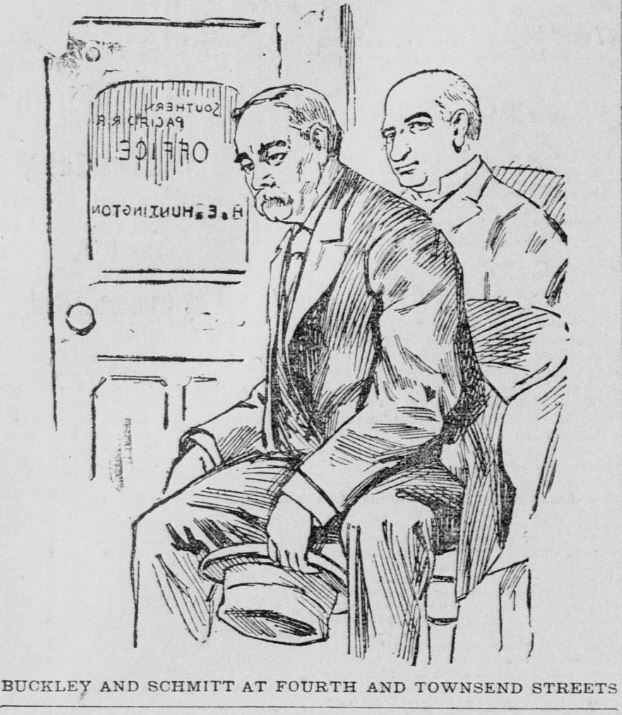
|
| Political boss Blind Chris Buckley and his henchman Maurice Schmitt call on Southern Pacific headquarters. (source: San Francisco Call, 26-October-1894). |
Maurice Schmitt was a member of the group of investors led by Robert F Morrow which purchased the Sutter Street Railway from Henry Casebolt. Schmitt had been a political dogsbody for San Francisco's Democratic boss, Blind Chris Buckley.
Go to top of page.
Sinon, William
William Sinon was one of incorporators of Andrew Smith Hallidie's Clay Street Hill Railroad.
From the 26-April-1895 San Francisco Call, page 8.
William Sinon is a retired builder and contractor. He is a native of Cork, Ireland, 55 years of age. He came to America in 1843. After being in Canada a few years he came to the United States. He returned to Canada, but in 1859 be came to San Francisco and has remained in this city ever since. He engaged in the building business and found it very profitable. He has put up hundreds of bouses, some of them for millionaires. Mr. Sinon built the house in which he resides, at 2015 Hyde street, thirty years ago and has occupied it since then. He pinned his faith to the northern hills of the city and as fast as he made money he purchased lots in the neighborhood of Union, Hyde, Leavenworth and Filbert, Larkin and Green streets and the vicinity. As fast as he could he built nouses upon the lots and is now enjoying a good rental and still improving his lots which have no houses on them. The majority of the buildings owned by Mr. Sinon are comfortable homes. William Sinon was one of the incorporators of the Clay-street Railroad Company, the first cable road in the world. The six other incorporators were Henry L. Davis, Joseph Britton, A. S. Halladie, Richard Tobin, Robert Sherwood and Fred Hamilton. The three last-named men are dead, but the first, three are still alive, and, peculiarly enough, the first two of the three named are members of the present Grand Jury. Mr. Sinon built the engine house for the Clay-street cable road and put in the first machinery at the corner of Clay and Kearny streets. Mr. Sinon is president of the Commonwealth Building and Loan Association, but occupies no other office. He is a widower and has two children. All of his property is in San Francisco. The assessment-roll shows that he owns the following property: Lot on the northwest corner of Hyde and Union streets; assessed value, $510; improvements, $500; total assessed value, $1010; tax, $15 82. Adjoining lot on Hyde street, to the north, assessed value, $510; improvements, $700: total assessed value, $1210; taxes, $18 94. Adjoining lot to the north, assessed value, $1100; improvements, $320; total assessed value, $1420; taxes, $22 24. Adjoining lot to the north, assessed value, $490; improvements, $300; total assessed value, $790; taxes, $12 38. Adjoining lot to the north, assessed value, $1850; improvements, $1800; total assessed value, $3650; taxes, $57 20. Lot on Union, near Hyde, assessed value, $470; improvements, $250; total assessed value, $720 (subject to mortgage of $00, original mortgage $5000, but covers two other similar pieces of property); taxes, $11 30; another lot on Union street, hear Hyde, assessed value, $520; improvements, $250 ; total assessed value, $770 (subject to mortgage of $428 as above); taxes, $12 08; another lot on Union street, near Hyde, assessed value, $1050; improvements, $1050; total assessed value, $2100 (subject to mortgage of $1168, as above); taxes, $32 90: lot on thesouthwest corner of Filbert and Hyde streets, assessed value, $1980; improvements $1100; total assessed value, $3080; taxes, $48 26; lot on Hyde street, near Filbert, assessed value, $1260; improvements, $1300; total assessed value, $2560; taxes $40 32; lot on Hyde street, near Filbert, assessed value, $1260; improvements, $300; total assessed value, $1560 (subject to mortgage of $700; original amount of mortgage, $5000, similar to other one mentioned above); lot on Hyde, near Filbert, assessed value, $320; improvements, $50; total assessed value, $370; taxes, $5 80; lot on Larkin, near Green, assessed value, $2540; improvements, $1600; total assessed value, $4140 (subject to mortgage of $2304. same as one immediately preceding); taxes, $64 86; lot corner Leavenworth and Filbert, assessed value, $330; taxes, $5 18; lot on northwest corner of Leavenworth and Havens, assessed value, $330; taxes, $5 18; lot on Green, near Hyde, assessed value, $730; improvements, 1400; total assessed value, $2130; taxes, $33 38. Mr. Sinon is not on the personal-property roll. |
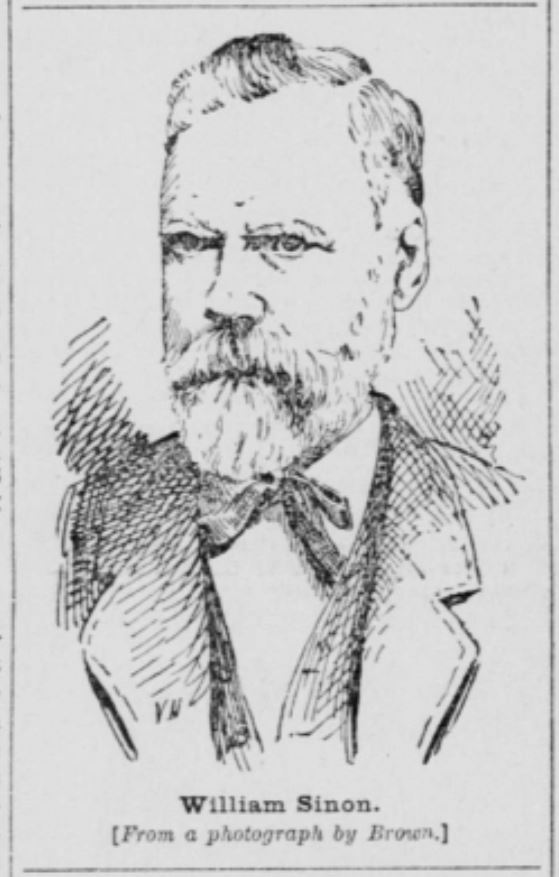
Go to top of page.
Smallwood, Charles A
Charles A Smallwood was a good man who was the pre-eminent historian of San Francisco's Market Street Railway.
From the San Francisco Chronicle, 16-Apr-1986
Charles A Smallwood
Charles A Smallwood, a retired cable car repair foreman, author of a
book on San Francisco streetcar history and collector of nickelodeons,
was found dead Wednesday in his Richmond District home.
Mr Smallwood, 73, was one of the last surviving employees of the
Market Street Railway, which was sold to the Municipal Railway in 1944.
He was one of the country's best-known electric railway historians and
his photos have appeared in dozens of books.
Near the end of World War II, while serving as a sergeant in an Army
transportation battalion that operated the trans-Iranian railway, Mr
Smallwood was sent on a secret mission to Moscow to hand over US-owned
railway equipment to the Soviet government.
A native of San Francisco, Mr Smallwood went to work for the Market
Street Railway as a night mechanic in 1938 and worked in most of the
Muni's streetcar barns before retiring in 1974 as foreman of the cable
car repair crew.
Mr Smallwood's 475-page book "The White Front Cars of San Francisco,"
published in 1971, has become a collector's item.
His interest in old machinery led to his acquisition of more than 50
nickelodeons. Many of the nickelodeons in the old Nevada mining town of
Virginia City belong to Mr Smallwood.
Mr Smallwood is survived by a sister, Marie, who also worked for the
Municipal Railway until her retirement.
Funeral services are pending at WC Laswell & Co, Daly City.
Go to top of page.
Stut, JCH
JCH Stut also designed a new grip for the extension of the Presidio and Ferries Railway.
From the May, 1895 Street Railway Journal, page 313.
J. C. H. Stut, of San Francisco, was one of the mechanics in 1873 for the construction of the famous Clay Street line of San Francisco, designed by Mr. Hallidie. At this time Mr. Stut was connected with Mr. Phelps, of San Francisco, who had the contract for furnishing the sheet iron conduit for that railway. In 1879 De was engaged in the Union Iron Works, of San Francisco, as draughtsman, and assisted in the design and construction of all the driving machinery and power plant for the Geary Street railway, and later, in 1883, the engines for the Market Street system, as well as the power plant for the McAllister Street and Hayes Street lines. In 18S3 he designed the power plant for the reconstruction of the Sutter Street line at the Union Iron Works. From 1887 to 1889 Mr. Stut was engaged in the design of the entire Omnibus Line and power plant of the system, including the Howard Street, the Oak Street aud the Post Street lines. This system comprised four sets of cross compound, condensing engines in two powerhouses. Mr. Stut was the first to apply the system of cooling condensing water on the roof of power houses, also to install a differential cut-off on cross compound, condensing engines for self adjustment and regulation in cable practice. This has been found very successful. In 1889 and 1890 Mr. Stut designed the new power plant and driving machinery for the California Street system, and employed here triple expansion engines for the first time in the history of cable roads. The vertical type of automatic tension run and several other improvements were employed here for the first time. Mr. Stut has also been engaged on other well known plants, not only in the cable railway line, but in other engineering work. |

Go to top of page.
Sutro, Gustav
Gustav Sutro, banker, broker and public utilities magnate, was a cousin of Adolph Sutro. Gustav was born on 20-October-1827 in Aachen, Köln, Nordrhein-Westfalen, Germany. Gustav came to San Francisco from Germany in 1854. He opened a cigar store on Montgomery Street with his cousin. Gustav and his brother Emil later founded a bank and brokerage which dealt mostly in municipal securities.
In the 1870s, Gustav acquired a controlling interest in the Omnibus Railroad. He reorganized the company and converted many of its lines from horse to cable traction. His obituary states that he pushed other transit companies into accepting transfers.
In the 1890s, he was president and treasurer of the Telegraph Hill Railroad.
He was one of the founders of the electric utility that later became part of the Pacific Gas and Electric Company (PGE).
Gustav Sutro died in San Francisco on 12-March-1897.
From the San Francisco call / Saturday, March 13, 1897. Page 2.
LIFE AND DEATH OF GUSTAV SUTROBrief Sketch of a Prominent Pioneer Just Passed Away.Was the Originator of the Streetcar Transfer System.The Firm of Which He Was President Dealt Extensively in Municipal Securities.The kindly face of Gustav Sutro, the banker and linguist, will never again be seen by his many friends on Montgomery street. He died at his residence, 1718 Pine street, on Thursday night.
The deceased was well known in San Francisco, where he had resided almost continuously since 1853, at which time he started a cigar-store on Montgomery street, in front of the then well-known saloon of Barry and Patton, with his cousin, Adolph Sutro, the ex-Mayor of this City. Leaving there, he went to Victoria, B. C, and engaged, in a similar business with his brother, the late Emil Sutro. Returning again to San Fraucisco, he formed a co-partnership with his brother, Charles Sutro, in the banking and brokerage business at 418 Montgomery street, where he remained until his death. In this business the firm dealt extensively in municipal bonds, and in the handling of such securities be became an expert and authority. This valuable knowledge came to him from early training, for after leaving school he entered the banking-house founded by his father in Aix-la-Chapelle in the early part of the century. He was there thoroughly trained for the line of business he chose in later life. In addition to bis banking and brokerage business he was identified in other pursuits which tended to develop the City, especially in the outside districts. In the seventies he purchased a controlling interest in the old Omnibus Railroad Company, then a borsecar line, and be came its president. Under his management the Omnibus Cable Company was organized and the system converted into a cable line, which soon became the most extensive in this City. The deceased will always be remembered with gratitude by the public of this City, for under his management of the Omnibus the system of general translers on the streetcar lines of this City was originated. In fact, be forced the Market-street Railroad and the other railroad companies to adopt that system. Mr. Sutro continued president of the Omnibus Cable Company until it was consolidated with the Market street and other linos. He was also one of the founders of the California Electric Light Company, which under his management grew into the powerful Edison Light and Power Company, which was lately consolidated into the San Francisco Gas and Electric Company. He was also prominently identified with the powder manufacturing interest of this coast. He was president of tno old Safety Nitro Powder Company and brought about its consolidation with the Giant Powder Company. He was also a charter member of the Stock and Bond Exchange of San Francisco, holding his seat up to the time of his death. The deceased was a brother of Charles and Albert Sutro of this City and of Elvira Gradwohl of Albany, N. Y., and a brother-in-law of Herman Zadig, the stockbroker of this City, whose sister he married in Hamburg, Germany, in October, 1864. Mr. Sutro was a man of polish and culture, as everything about his late residence indicates. He received a good education in the High Scuool of his native city and became very proficient in his studies. When only 16 years of age he could speak, read and write German, French, Spanish and English. The funeral will be held from his late residence to-morrow afternoon at half past 1 o'clock. |

Go to top of page.
Thompson, Jesse Murdock
Jesse Murdock (JM) Thompson was an engineer who worked for the patent trust's Pacific Cable Construction Company.
In 1885, he designed and built the Second Street Cable Railway in Los Angeles. The line's single track technology was not a success.
Thompson did most of his work in the Pacific Northwest.
In 1888, he designed and built Seattle's first cable car line, the Seattle City Railway. Thompson designed and promoted the Front Street Cable Railway in 1889. In 1891, he designed the Madison Street Cable Railway. He designed the West Seattle Cable Railway in 1890. The only Seattle cable railway line he was not involved with was the Union Trunk Line.
In 1887, he designed the Portland Cable Railway in Portland, Oregon. Financial problems delayed completion until 1890. This line had a great deal of trouble with Portland's harsh climate.
In 1888, Thompson designed and built the north line of the Spokane Cable Railway in Spokane, Washington. This was another single track line.
Thank you to Dotty Decoster and Suzanne Hansen for cluing me in to JM's first and last names. There are an awful lot of Thompsons running around.
|
From the 1890 Langley's San Francisco Directory at
San Francisco Genealogy, page 1284:
Thompson, J. M., president Pac. Cable Construction Co., 258 Market, r. Palace Hotel |
From the May, 1895 Street Railway Journal, page 314.
J. M. Thompson was born in Augusta, Me., in 1851. In 1872 he went from New York City to St. Paul, Minn., and entered the service of the Northern Pacific Railroad. Here he rose rapidly, and at the time of his resigning was the paymaster of the company. In 1876 he moved to San Francisco, where he became acquainted with Mr. Hallidie, and secured the control of the Hallidie elevated wire system for certain countries. Among these were the Hawaiian Islands and Mexico, where he installed several wire transportation systems. His first cable road was built in Los Angeles, Cal. This enterprise proved so successful that he organized and built the Temple Street cable road in the same city. He finally sold his interests in both roads, and went to Denver, Colo., where, with others, he secured valuable franchises which were sold to the Denver Tramway Company. His next enterprises were the Yesler Avenue and Front Street cable railways, of Seattle, Wash. After selling his interests in both these roads, be built another road at West Seattle, then went to Portland, Ore., where he was awarded the contract for building the cable railway in that city. He is now located in Chicago, and is connected with several large enterprises, both cable and electric. |

Go to top of page.
Upton, William B
From the May, 1895 Street Railway Journal, page 316.
William B. Upton has been connected with the construction cf cable railways continuously for the past eight and a half years. Coming from the city of cable railways, San Francisco, where be became familiar with the system in use there, he was appointed assistant engineer of the Grand Avenue Railway Company, of Kansas City, Mo. In the spring of 1886 he prepared the plans for this system, which embraced about twenty-one miles. In the summer of 1889 he was appointed assistant engineer of the Washington & Georgetown Railway Company, of Washington, D. C, and prepared the plans for the 7th Street line of this company, six miles in length. In the summer of the following year Mr. Upton went to Tacoma, Wash., where he constructed about one mile of cable railway for the Tacoma Railway & Motor Company. He returned to the Washington & Georgetown Railway in the winter of 1890 and prepared all the plans for this company's Pennsylvania Avenue and 14th Street lines, comprising about fourteen miles of cable. He also designed and arranged the machinery in the company's central power station. Since June 15, 1894, Mr. Upton has been chief engineer of the Columbia Railway Company, of Washington, D. C., and has had under construction for this company about six miles of cable road, which will be completed early this year. The cable regulating devices in use on the Washington & Georgetown road and the Baltimore City Passenger Railway were invented and patented by Mr. Upton. |
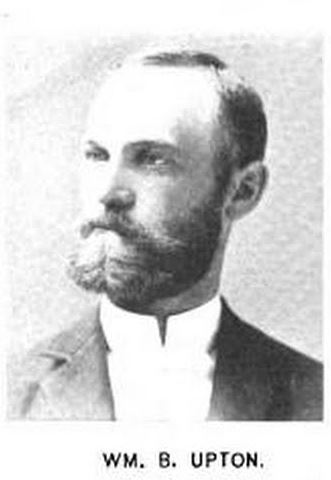
Go to top of page.
Van Vleck, Frank
Engineer Frank Van Vleck was involved in designing, building and operating the Los Angeles Cable Railway and the San Diego Cable Railway.
Frank Van Vleck died in Washington DC's Walter Reed Hospital on 25-February-1939.
From the Washington Evening Star / Saturday, 25-February-1939.
Lt. Col. Van Vleck,Naval Architect,Dies Here at 76Officer Saw LongService in ArmyTransport DivisionLt. Col. Van Vleck, 76, retired supervising engineer and naval architect of the Army Transport Service, died Thursday in Walter Reed Hospital after an illness of three months. Funeral services will be held at 2 p.m, Monday in the Fort Myers Chapel. Burial will be in Arlington National Cemetery, with full military honors. Col. Van Vleck, who lived here in the Wyoming Apartments, served in his position in the Army Transport Service from 1916 until he retired in 1935, except during the World War, during which he served in the same office in the Quartermaster Corps. At the time of his death, he was a lieutenant colonel in the Officers' Reserve Corps. Col. Van Vleck, a distinguished engineer, was one of the founders and a charter member of the Society of the Sigma Xi, honorary scientific organization. Born in Napanoch, N.Y., he was a son of the later Rev. John Van Vleck of the Dutch Reformed Church. Col. Van Vleck was graduated in mechanical engineering at the Stevens Institute of Technology in 1884. In 1904 he received a Ph. D. degree from George Washington University. In 1889 Col. Van Vleck was chief engineer of the Los Angeles Cable Road Co. while it was building its first street car system. With the passing of the cable street car era he engaged in building electric street railroad and interurban transportation systems. During a brief time Col. Van Vleck was associated with the late Thomas A. Edison in some of his earlier scientific work. In the World War Col. Van Vleck was a pioneer in designing concrete boats and barges for use during the emergency. He also was among the first of naval architects to design all-welded steel vessels. Besides belonging to the Sigma Xi, Col. Van Vleck was a member of the American Society of Naval Architects and Marine Engineers and the Chi Psi Fraternity. He belonged to the covenant-First Presbyterian Church. Col. Van Vleck was twice married. His first wife was the former Augusta Shapeleigh Peirce of Baltimore, who died in 1934. In 1937 he married Caroline Wyville Robertson of this city. He leaves his wife a son, Peirce Van Vleck of Washington, and a daughter, Miss Dorothy Van Vleck, Tucson, Ariz. Col. Van Vleck was a brother of the late John Col. Van Vleck was, who at one time was the chief engineer for construction of the subway system in New York. |

Go to top of page.
Go to top of page.
Walker, John
From the May, 1895 Street Railway Journal, page 317.
John Walker was born August 3, 1847, in the county of Yorkshire, England. Upon coming to the United States about twenty-eight years ago he settled in Philadelphia, and for a time was in the employ of William Sellers & Company, where he invented his famous gear scale, for setting out graphically the form of teeth for gear wheels. Subsequently Mr. Walker was connected with William Wright & Company, of Newburgh, N. Y.; then with Poole & Hunt, of Baltimore, and later with Nordyke & Marmon, of Indianapolis. In 1882 he organized with J. B. Perkins, Gen. M. D. Leggett, Hon. Geo. W. Gardner, H. T. Taylor, T. Kilpatrick and others, the Walker Manufacturing Company. It was five years after the organization of this company that he brought out the great invention with which his name has been mainly identified -- the Walker differential rings for cable work. This invention was conceived by Mr. Walker as the result of his observations in the cable power house in Kansas City, Mo., where he was watching the sparks flying from the winding drums, due to the friction of the cables. To him the question arose how this disastrous wear and tear could be prevented. He at once conceived the idea of a drum with differential rings, and straightway proceeded to his room in the Coates Hotel, where he made a drawing of this conception. The Walker Manufacturing Company has built and put in operation cable machinery for the Metropolitan Street Railway Company, Kansas City, Mo., St. Louis Cable & Western Railway, St. Louis, Mo, ; Washington & Georgetown Railroad Company, Washington, D.C.; People's Railway Company, St. Louis, Mo.; Baltimore City Passenger Railway Company, Baltimore, Md.; Catskill Mountain Cable Railway Company, Catskill, N. Y.: Cleveland City Cable Railway Company, Cleveland, O., and others, making twenty complete cable plants in all. Besides the differential rings mentioned, Mr. Walker has designed and patented a large number of other inventions, the number of patents taken out by him amounting two years ago to the number of sixty-two. Some time ago Mr. Walker severed his connection with the Walker Manufacturing Company, and is now connected with Fraser & Chalmers, of Chicago. |

Go to top of page.
Ward, Albert E
|
Three-time champ Albert E Ward rang the bell in a 1962 Rice-A-Roni commercial. |
Gripman Albert E Ward, an ex-Army drummer, won the annual Bell Ringing Contest at Union Square in 1957, 1958 and 1959.
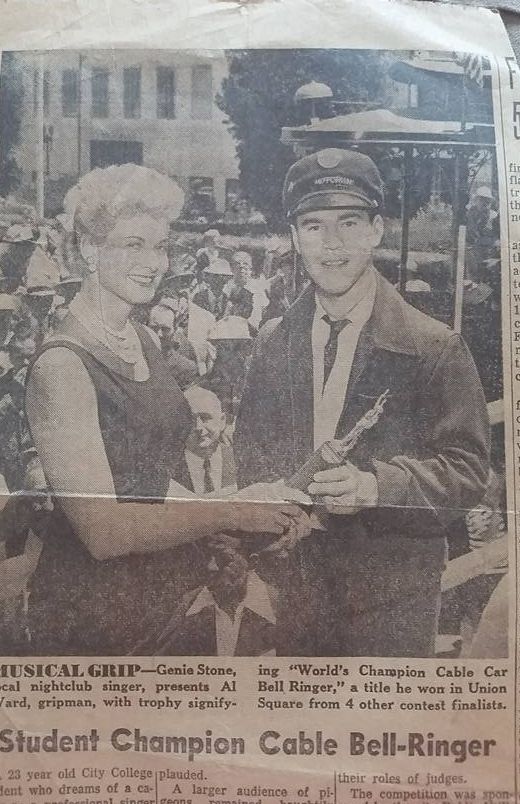
|
Albert E Ward receives his 1957 bell ringing trophy from nightclub singer Genia Stone in an undated newspaper clipping from a San Francisco newspaper (thank you to Leslie Portillo-Ward for the clipping). |

|
Albert E Ward gives a bell ringing lesson to Ice Follies skater Irene Maguire, who had presented him with his "second National Safety Council trophy." in an undated newspaper clipping from a San Francisco newspaper (thank you to Leslie Portillo-Ward for the clipping). |
In 1961, Al Ward served as the best man for a wedding on a cable car.
Thank you to Leslie Portillo-Ward and her husband for the information and the newspaper clippings.
Go to top of page.
Whitton, Andrew D
|
From the May, 1895 Street Railway Journal, page 314.
A. D. Whitton, who at the time of his death in February, 1892, was chief engineer of the Philadelphia Traction Company, was born in Scotland, in 1856. He moved to this country about 1882, and after remaining in Baltimore for about two years, removed to Philadelphia and entered the service of the Philadelphia Traction Company. Mr. Whitton built the Market Street cable line of that city and superintended the construction of nearly all the cable lines which have been built by the Philadelphia syndicate, including those in Pittsburgh, the North and West Chicago lines, and the Baltimore line. Mr. Whitton also made some early plans for the Broadway, New York, cable line, but owing to failing health he was not able to superintend the construction, and the work was committed to other engineers,who changed the plan and adopted a different type of construction. Mr. Whitton was accustomed to work along independent lines, and was most prolific in invention, having been the patentee of a number of appliances relating to cable traction. |
Go to top of page.
Wise, Clift
From the May, 1895 Street Railway Journal, page 314.
Clift Wise is a native of St. Louis, having been born in that city June 10 1861. He received his preliminary education in the St. Louis schools, and attended the polytechnic school of the Washington University. His first connection with street railways was in January, 1883, when he was appointed division engineer of the Kansas City Cable Railway. Eighteen months later he was appointed chief engineer, and constructed three of the cable lines of that company, viz., Independence, East 9th Street line and Troost Avenue line. The cable power station for these lines is said to have been at that time the largest in the world used for cable purposes. Mr. Wise was engineer and constructing engineer of the cable lines in St. Paul. Minn., and of the electric railways of that city and Minneapolis. He has been active in recent electric construction, one of the latest roads installed by him being the electric railway system, of Atchison, Kan. He also at one time had charge of a cable railway in Philadelphia. Mr. Wise's headquarters are in Chicago. where he is a member of the engineering and constructing firm of Clift Wise and Company.
|

Go to top of page.
Wood, Fred W
From the May, 1895 Street Railway Journal, page 314-315.
Fred W. Wood, president of the Temple Street Cable Railway Company, of Los Angeles, Cal., was born in Prairie du Chien, Wis., April 28, 1853. From 1869 to 1874 he was involved in the engineering department of Kansas City, Mo., and of the Chicago & Northwestern Railway in Wisconsin and Michigan. During this time he acquired an all-round and valuable experience in field and construction work. He moved to Los Angeles, Cal., in 1874 and became manager of the Beaudry water works system of that city, continuing in that position until 1881. From 1882 to 1886 he acted as secretary and managerof the San Gabriel Wine Company, and in that position he had charge of the construction of the buildings and machinery for the largest wine making establishment in the world. From 1886 to the present time he has been connected with the Temple Street Railway Company of Los Angeles, Cal., in the various capacities of secretary and manager. During this time it has been necessary to rebuild a large portion of the road and to entirely replace the machinery. This has all been done according to special designs of Mr. Wood, which attests his inventive faculty and sound engineering judgment. Finding, as a street railway manager, a continually increasing necessity lor a knowledge of law, he put his small margin of time for a year or two to such good use that, in 1892, he was admitted to the bar of the Supreme Court of the Slate of California. Mr. Wood is a member of the American Society of Mechanical Engineers, and is first vice-president of the Engineers' & Architects' Association of Southern California. |
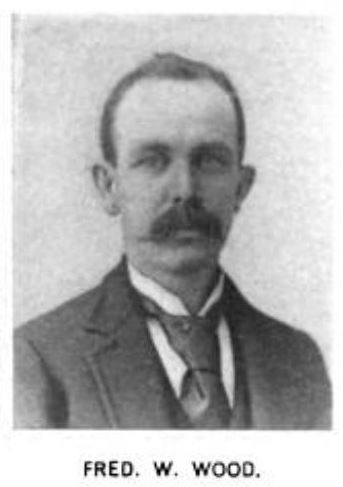
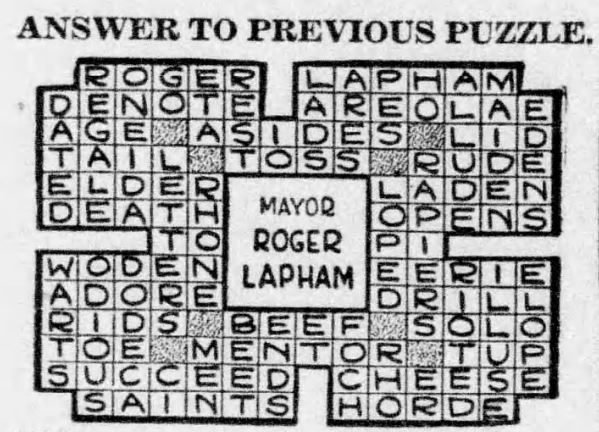
Go to top of page.
Wright, Augustine W

|
| An ad for AW Wright "Consulting Engineer for Horse Railroads". He also worked on cable railroads. Note that he is to be contacted care of the North Chicago City Railway, where he was superintendant of track and construction. From the April, 1885 Anerican Railroad Journal. |
Augustine W Wright served as superintendant of track and construction for the North Chicago Street Railroad. In 1889, Wright designed the Los Angeles Cable Railway/Pacific Cable Railway.
Go to top of page.
Yerkes, Charles T
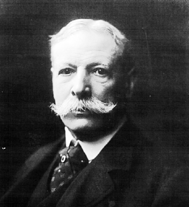
|
Charles T Yerkes. (Source: YERKES OBSERVATORY PHOTOGRAPH. Used with permission) |
Charles Tyson Yerkes fit the common Nineteenth Century view of capitalist as thief. He did, in fact, serve time in the penitentiary in Pennsylvania for stealing funds from the city of Philadelphia.
Yerkes was born in 1837 in Philadephia. He worked his way up from clerk to banker. In an 1871 financial panic, his firm went bankrupt and his misappropriation of city funds was revealed. He was sentenced to 33 months in the penitentiary but was pardoned after serving seven. He moved to Chicago in 1881.
In 1886, Yerkes purchased the North Chicago Street Railroad. When he converted the company's main lines to cable traction in 1888, they worked badly. Much of the hostility the public felt towards the company was magnified by its hostility towards Yerkes and his colorful methods. His techniques for influencing legislators included bribery and badger games. He later acquired the West Chicago Street Railroad.
In his 1892, in an effort to buy respectability, he donated funds for the Yerkes Observatory to the University of Chicago. Their web page has much interesting biographical information about Yerkes.
Yerkes built large parts of the Chicago Elevated. He left for London about 1900 and built some underground lines there.
Yerkes died in New York on 29-Dec-1905.
Go to top of page.
Origin and Development of Cable Railways
Many of the items on this page came from this article in the May, 1895 Street Railway Journal. The first cable car line, the Clay Street Hill Railroad, actually ran its first test on 02-August-1873.
ORIGIN AND DEVELOPMENT OF CABLE RAILWAYS.
BIOGRAPHIES OF SOME OF THE EARLY ENGINEERS.
The modern American system of cable railways has had an extensive development in this country and has been introduced successfully in a number of foreign cities. Much is due to the inventors and capitalists who have so successfully adapted rope haulage to street railway traffic, because they had very little previous experience to work from. There was, it is true, some prior experience, but whether the early experimenters in this country were aware of the previous experiments, we are not informed. Doubtless the builders of the first cable railway in San Francisco, in 1873, may lay claim to having originated the scheme, so far as the successful operation of street railways by this means is concerned.
To Andrew S. Hallidie, of San Francisco, who is still a resident of that city, belongs the credit of having devised and put into successful operation the modern system of cable traction. Equal credit, however, is due to the financial associates of Mr. Hallidie, Henry L. Davis, Joseph Britton and James Moffit, these gentlemen having been the principal subscribers to the subsidy by means of which the road was built. As early as 1871 and 1872, Mr. Hallidie conceived the idea of a cable line on Clay Street in San Francisco where the gradients were too severe (16 per cent. and over) to be worked by horse or steam power, and succeeded in inducing capitalists to invest in the enterprise. On the morning of August 1, 1873, the first trial trip was run over the line, and after some experimenting the road was pronounced an unquestionable success and became the pioneer of all similar schemes. Not, however, until two years after was a second line begun. The success of this second line, which was on Sutter Street, gave great impetus to the enterprise, and in ten years six lines had been opened in San Francisco. The chief promoter of this second line was Henry Casebolt, superintendent of the road, who employed as a chief engineer Asa G. Hovey, who with Henry Root should be classed among the pioneer cable engineers of the country.
Chicago was the second city to adopt a cable system, the first line being opened in 1882. Philadelphia followed in 1883, and following these dates other roads were opened in rapid succession, and at present 662 miles are in operation in this country. A considerable portion of cable railway mileage has been changed to electric traction, notably roads in Omaha, Denver, Sioux City, Philadelphia, Grand Rapids, St. Louis and Providence, R.I., in some cases because the traffic was not sufficient to warrant cable power, in other cases to unify the method of operating cars, not because of any particular inherent defects in the cable system. It will not be necessary to dwell further on the development of the cable roads in this country, the particulars being graphically stated in the following biographies of the principal cable railway engineers, in which will also be found some of the difficulties that have had to be overcome in the development of the system in the different cities
To those who are interested in the previous history of rope haulage, we quote the following from Smith's book on cable or rope traction, published in London in 1887, from which it will be seen that the mere idea of hauling cars by means of a moving rope actuated from a stationary source of power, is not a new one.
As early as 1812, Messrs. W. & E. Chapman proposed to employ a fixed cable or chain upon roads or streets for the purpose of propelling cars thereon, by winding or hauling upon it from the platforms of the cars; and about 1824 a W. James enrolled a scheme at the United States Patent Office for employing a traveling chain for the haulage of carriages upon highways, the chain being operated within a tunnel or channel provided in the rails. In 1829 an endless cable traction scheme was propounded by M. Dick; and in 1838 W. J. Curtis applied for certain improvements in rope haulage, and gave an interesting description of a car provided with a cable gripping device that was essentially the same as the cable gripping appliances of to-day.
The first suggestion for placing a constantly running cable within a longitudinally slotted underground tube or channel was made by W. Bradling in 1845. In 1858, E. S. Gardiner, of Philadelphia, invented a conduit having a narrow slot through its whole length, similar to the slotted track tubes proposed and used in atmospheric railways many years before. Within this tube he proposed to mount a series of carrying pulleys, upon which the cable should ride. It does not appear that he ever put in practice his ingenious invention.
To Messrs. A. Smith and Newall is chiefly due the credit of having first, as early as 1830 to 1833, successfully used cable haulage in English collieries, where the cars were fitted with intermittent acting grippers. Within and immediately following the above dates, wire ropes were used on the Continent in the mines of Saxony, and later in some of the Scottish mines. Not till 1840, however, do we find that cable haulage was successfully employed for passenger traffic, and though the plan had but little analogy to othe modern cable system, yet it is interesting to glance at this old and ingenious scheme.
The road to which we refer was the original Blackwall Railway, which extended three and three-quarters miles from the Minories to Blackwall, England. The gauge of the track was five feet, and the line was constructed upon a series of brickwork arches, and the shortest curve had a radius of 3,000 ft.
The first hauling rope employed was of hemp, about five and a half inches in circumference. It was driven by being alternately wound up and paid out by drums twenty-three feet in diameter. These drums were placed at the termini, and when all the rope was coiled upon one drum the engines were stopped and the rope was then set in motion in the reverse direction. The line was in duplicate throughout, and the trains were started simultaneously from each end.
The number of cars in a train varied from six to twenty-six, the first class carriages being constructed to carry forty and the third class seventy persons. Each car was provided with lever brakes, a coupling and a rope gripping apparatus. There were six stations on the system, and as the train arrived at the successive stations one or more cars were released, the first car being carried over the whole line. When the rope stopped, the cars at the various stations were re-attached, and on the return trip the cars were separated by intervals corresponding to the distance between the stations, and on reaching the hauling machinery were in turn released from the rope. The carrying pulleys were three feet in diameter and placed thirty-five feet apart. The speed of the rope was from twenty-five to thirty miles an hour, and the trains performed from fifty to fifty-eight journeys per day. Shortly after the line was started the hemp rope was frequently broken by excessive strain, and metallic cables were substituted.
During the year 1844 upwards of 2,500,000 passengers were carried over the line. The line was operated until 1848, when locomotives were substituted for the cable system. Little progress was made in the development of the cable system from this time on to 1872. Various schemes were proposed, among them one by Foster and Brown in the United States, which employed an overhead endless rope for working street cars. This plan was further developed in 1869 by G. F. Beauregard, of New Orleans. C. F. Harvey, in 1866, proposed a plan for placing collars or ferrules on an underground traveling rope, to engage with gripping forks to be lowered from the cars, and subsequently built a short line of elevated cable road on Ninth Avenue, New York City.
- Hallidie, Andrew S
- Eppelsheimer, William E
- Casebolt, Henry
- Harris, James W
- Bartlett, Winthrop
- Holmes, Howard C
- Bowen, Menard Kenner
- Miller, DJ
- Lane, Henry M
- Stut, JCH
- Wise, Clift
- Thompson, Jesse Murdock
- Whitton, Andrew D
- Wood, Fred W
- Lawless, EJ
- Kebby, HM
- Hovey, Asa
- Hovey, Asa
- Gillham, Robert
- Upton, William B
- Connett, AN
- McNulty, George W
- Root, Henry
- Potis, Salvator Jr
- Knight, William B
- Phenix, William
- Walker, John
- Nash, CT
Go to top of page.